Why This Project Exists
And how it might survive.
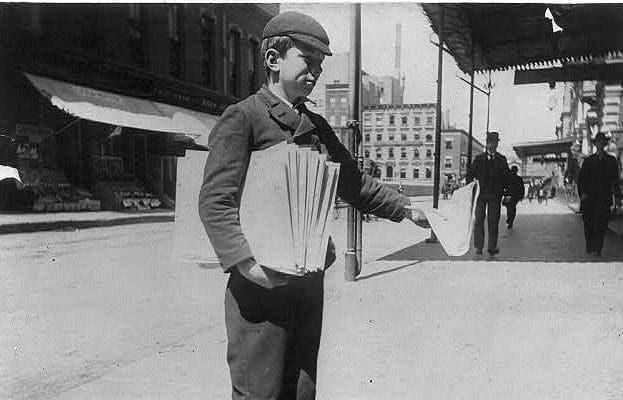
There’s a concept in journalism called a “news desert” — a place where robust media coverage doesn’t exist. The classic example is a rural county where the local newspaper has gone bust, and nothing has replaced it.
It feels a little ridiculous to say that we live in a news desert here in Washington Heights. We’re in the media capital of the United States. Many outlets — Gothamist, The City Reporter, Hell Gate, The New York Times, etc. — employ excellent teams of reporters who cover the city.
But: While these outlets do a terrific job covering citywide issues, a whole lot of neighborhood news flies on by. The result is that big things can happen in our community — shuttered parks, major planned construction, multimillion-dollar initiatives — without getting the kind of public scrutiny that comes through journalism.
For years, I've wanted to read more reporting about the Heights, written specifically for people living here. I don't think I'm alone in that desire. Readers everywhere want local news. But building a sustainable local-news outlet is hard.
An Oversimplified History of Media Collapse
In 2002, there were roughly 40 working local journalists per 100,000 people in the United States, according to a project called the Local Journalist Index. Today, that number has dropped to around eight.
What happened?
Once upon a time, local newspapers made money from subscriptions. But the bulk of their revenue came from advertising and classifieds.
The internet destroyed this business model. Craigslist all but ended the traditional classifieds market. (The company’s founder, Craig Newmark, subsequently donated millions of dollars to journalism organizations. CUNY’s journalism school is named after him.) In the years that followed, readers got used to getting news online for free, often from social media.
“With Facebook and Google capturing the vast majority of digital revenue in many communities today, traditional news organizations, as well as online outlets, have been reduced to fighting over the digital scraps,” a team of researchers wrote back in 2020.
The story is more complicated than just this. But the outcome is apparent: Thousands of newspapers closed down. Those that survived usually shrank. Today, a handful of big national players, such as The New York Times, are making money, mostly from subscriptions. But many local newspapers continue to struggle, if they’re still around at all.
Evidence suggests that, when local news fades, municipal corruption and ineptitude increase. It’s a big loss: Local news connects people to their communities. It can bring us joy. And it helps grassroots democracy work better.
Experimentation
All of this sounds bleak. But perhaps surprisingly, it’s an exciting time to be making local journalism. Across the country, people are launching creative local-media ventures. Some are nonprofit. Many depend on readers for their revenue. Others rely on philanthropic donors or advertising.
The breadth of experimentation is thrilling. I’m part of an incubator for local-news sites called the Tiny News Collective. One site is devoted to grocery prices in Portland, Oregon; another covers the weather in Washington, D.C. Several members are effectively building new newspapers for their towns. One Tiny News Collective member's nonprofit news site in Alaska was so successful that she bought the local legacy newspaper.
What these reporters have in common is a willingness to work long hours, often for little pay, because they believe in the power and possibility of local journalism.
Here in the Heights, several groups are thinking about local media. Led Black and Octavio Blanco host the terrific Uptown Voices podcast, which runs sharp interviews with policymakers and fascinating short videos about the neighborhood. HeightSites tracks events uptown. The Manhattan Times occasionally drops strong stories about local issues. Closer to Inwood, there’s the Dyckman’s Diary account on Instagram. And on Facebook, a handful of community volunteers post news and updates, trying to keep their neighbors informed.
That’s great — but also not a lot, for a neighborhood that has more people than the city of Syracuse. My goal is to add more old-school, print-style reporting to the mix.
The Plan
Making journalism is a lot of fun. It’s also a lot of work. I spend hours each week fielding tips and scouting out potential stories. For a longer feature, I do background reading, dig around public documents, and do lots of interviews — some of which don’t end up in the final story.
Once I’ve finished writing and editing the newsletter, I go through it line-by-line, checking to see if I got details right. (Mistakes happen anyway!) Verifying information just takes time: For example, there’s a minor-but-important detail in this week’s newsletter that required 30 minutes of research and three phone calls to Albany to confirm.
For this to remain sustainable, the newsletter needs to bring in some revenue. Sponsorships and philanthropy might cover some of that gap, but reader support is the way this project will actually flourish. Call it community-supported journalism: Readers chip in a few bucks a month. In return, you get a professional reporter who will chase down local stories, verify information, and — I hope — make something you enjoy reading.
If that seems like a good deal to you, and you can afford it, I hope you’ll join as a paid member. The lowest membership tier is $6/month — the price of two subway swipes.
The newsletter is going to remain free. I understand not everyone will want to pay, and I want the journalism to reach as many readers as possible. Think of this like a pay-what-you-can restaurant. The goods will be available to whoever wants them. But if you’re able to pay a little something for your meal, I hope you’ll chip in.
Have a story tip? Email mhschulson@gmail.com, or message me on Signal (Schulson.17) or WhatsApp (646-279-6952).