Coming Soon: The HUB
The future of the Fort Washington Collegiate Campus.
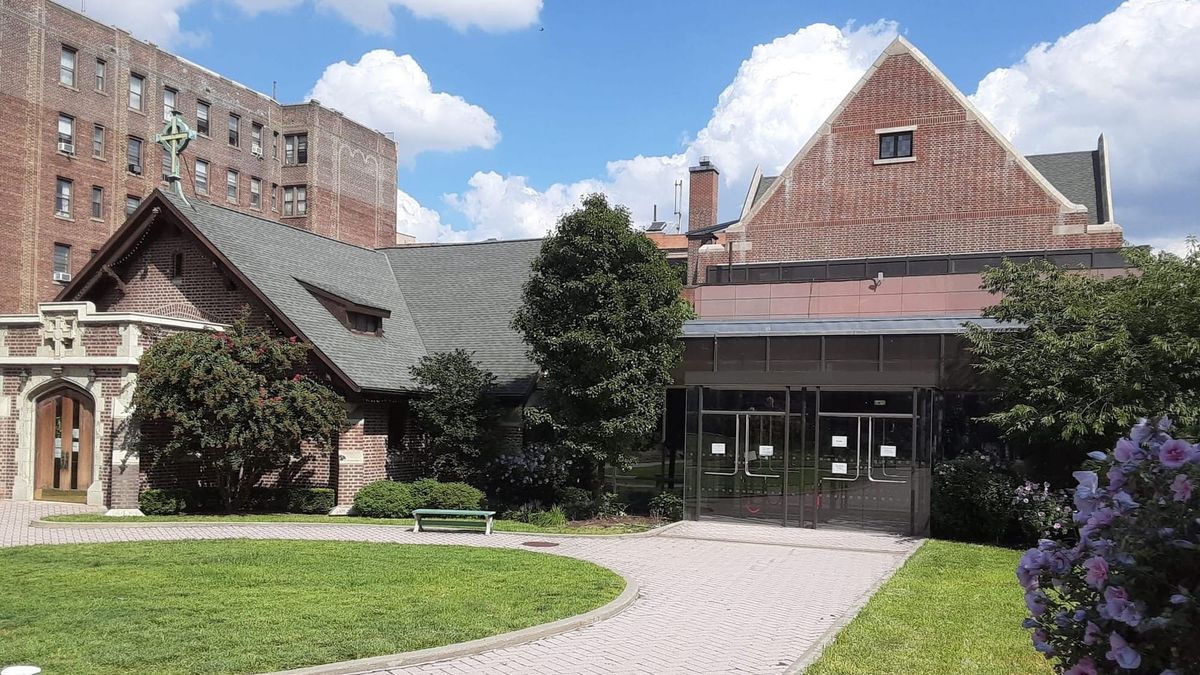
Big changes are coming to the historic church at the corner of 181st Street and Fort Washington Avenue.
If all goes according to plan, the site will soon house the Early Childhood & Family HUB of Washington Heights — a free community center featuring indoor and outdoor play spaces, a garden, a teaching kitchen, classrooms, event space, and room for public performances. The place is designed for children aged 5 and under and their caregivers.
The HUB is splitting the space with Nido de Esperanza, a nonprofit that provides services to vulnerable families during the first years of a child’s life.
The leaders of the HUB have a long-term lease on the space, and they told me they’re planning some substantial renovations to the building’s interior. Work is slated to begin in October, with a launch sometime next spring.
A Decade in the Making
The HUB is the brainchild of Dodi Meyer, a Buenos Aires-born pediatrician and professor at Columbia.
Meyer researches how social environments affect children’s health; she works mostly with Spanish-speaking families in the Heights. Around one-quarter of children here live below the federal poverty line. Many children live in overcrowded apartments and don’t always have much space to play, especially if weather, safety concerns, or immigration enforcement deter caregivers from taking them outside.
Meyer started to imagine a kind of community center that would offer small children a place to play. It would also provide support for caregivers, who could take a class or attend a support group or get help navigating social services.
Elements of this idea exist elsewhere. Some libraries have fabulous children’s areas staffed with friendly public servants. New York City has Family Enrichment Centers “where families and community members can build relationships, participate in activities, and connect to resources and concrete supports.” Downtown, there are spaces like Cocoon, a private club with locations on the Upper West Side and in Tribeca that’s basically a cross between an indoor playground and a very swank rec center. But while Cocoon membership can top $700 per month, the HUB will be a free resource catering to working-class New Yorkers.
Meyer said that when her three kids were small, she’d often visit a different playspace on the Upper West Side. “That was my godsend. I would just collapse on the floor and let the kids do whatever and I would get a break,” she told me. “I live in a very comfortable apartment. If I need it, my mothers who I treat in Washington Heights need it 100 times more.”
The HUB’s unique angle is to bring lots of these elements into one big building: the play areas, the programming, the convening space for local organizations.
The closest analogue might be an initiative in the U.K. called Babyzone.
Meyer started working on the idea a decade ago. But the pandemic, funding issues, and challenges finding space made it difficult to see the project through — until now.
The Building
Meanwhile, a major community gathering place has been sitting underutilized for more than a year.
The elegant building on 181st Street used to be the home of the Fort Washington Collegiate Church, which was part of a larger organization called Collegiate Church. In 2013, the church began a $10 million renovation of the building, adding a glass-walled atrium that a consultant on the project told The New York Daily News would be "similar to an Apple Store.”
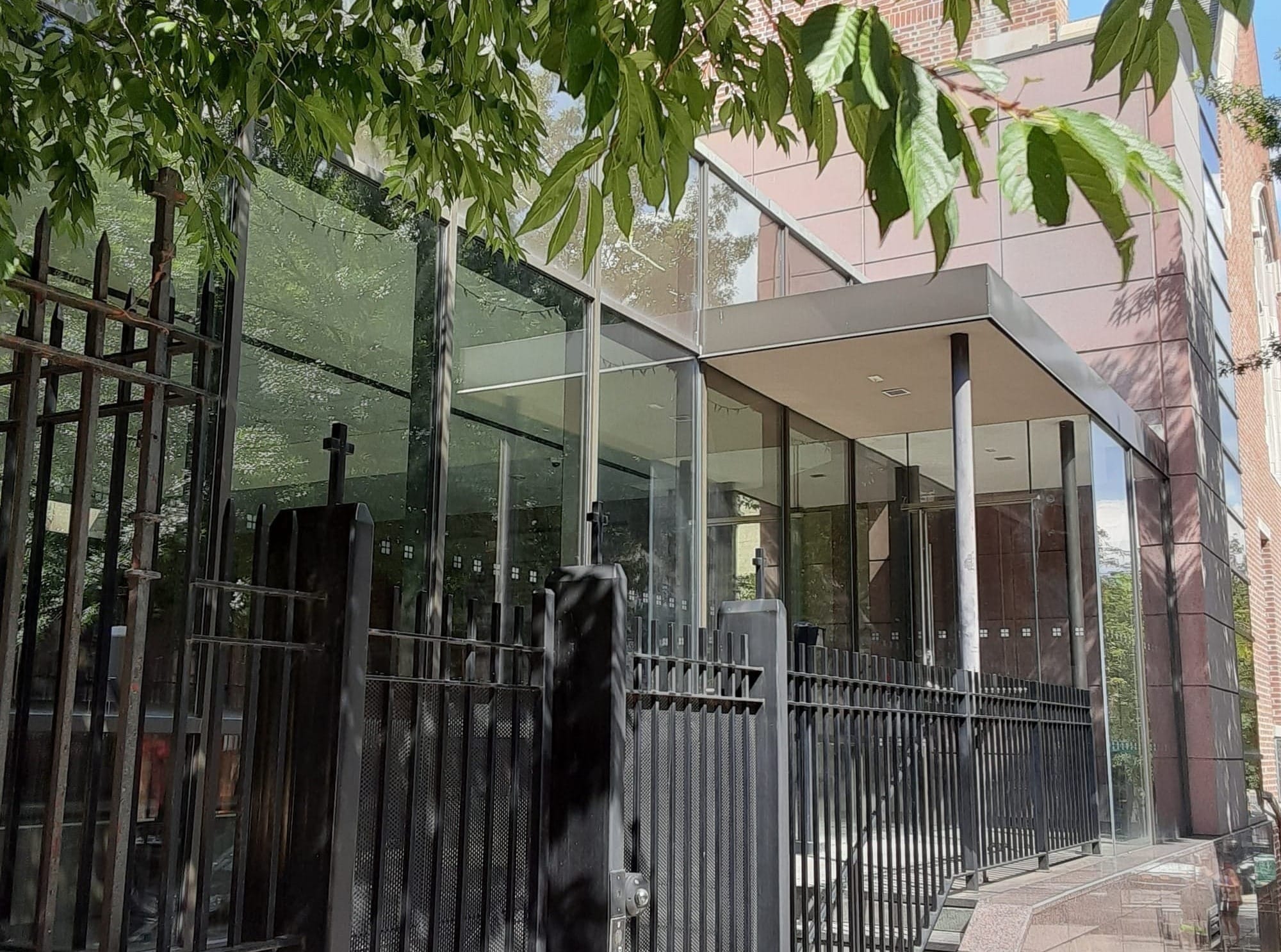
The renovations looked great. But, not long after, a real-estate deal downtown failed, and Collegiate Church found itself in financial trouble. In 2021, the church asked individual ministries around the city, including the Fort Washington Collegiate Church, to make plans for financial independence. FWCC began looking for a tenant to help pay the bills.
The community struggled to secure a long-term tenant for the full space. In April 2025, Collegiate Church closed down the Fort Washington church, saying it was “no longer sustainable” — a decision that upset many people in the community.
Meanwhile, according to Meyer, plans for the HUB to be part of New York-Presbyterian Hospital and Columbia had fallen through. The HUB and Nido de Esperanza signed two-year leases in July, with the option to extend another decade.
“We’re thrilled that these are the tenants that will be using the site and transforming future generations of immigrant families,” Reverend Stan Sloan, the managing director of Collegiate Church, told me.
The Plan
Last week, I visited the HUB to speak with Meyer and Jumaane Saunders, a former public-school teacher and charter-school principal who became the HUB’s executive director in July. We sat in a still-undecorated office; Meyer joined us via videoconference.
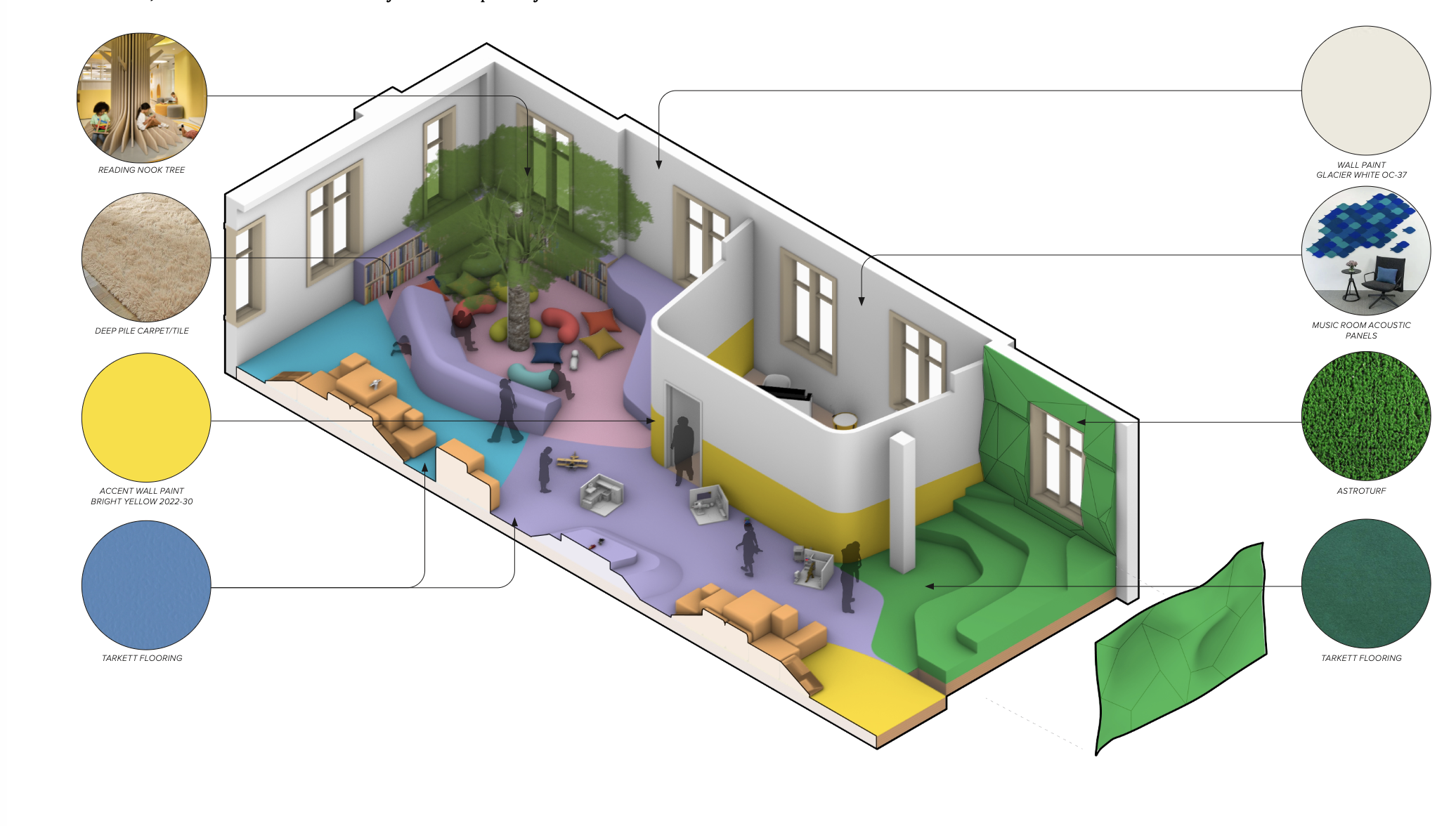
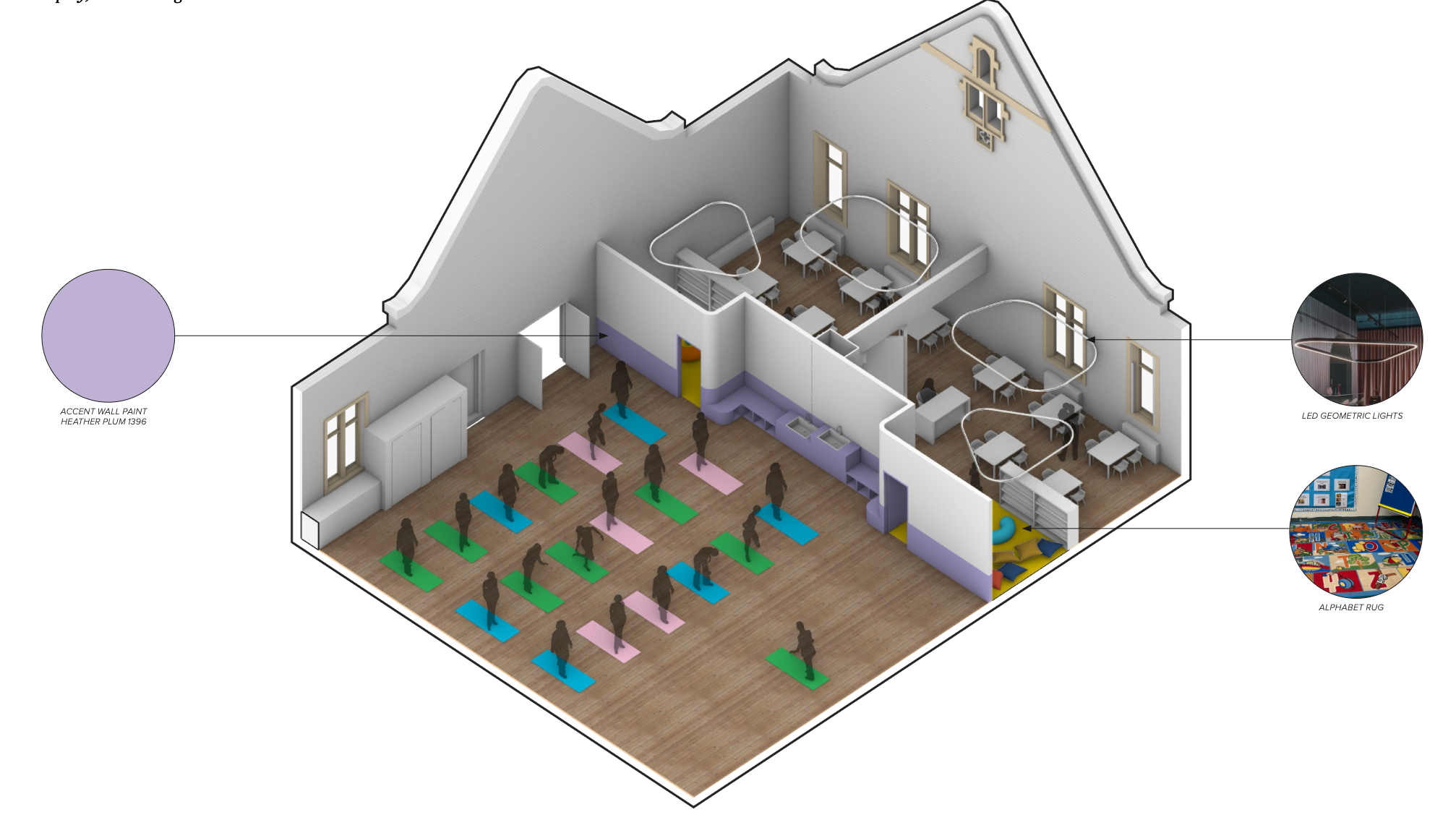
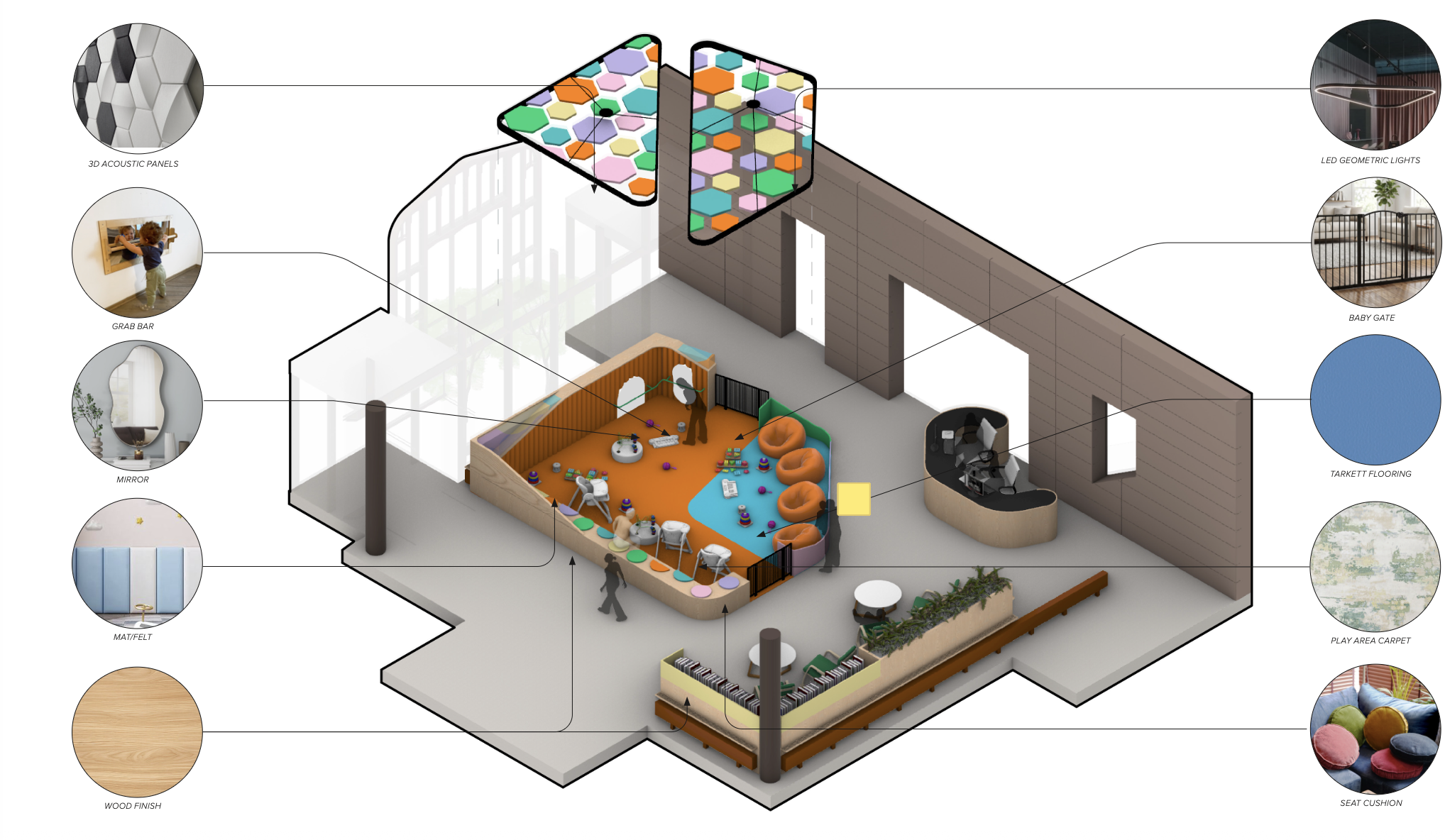
They walked me through the plans.The airy atrium in the front of the building and a large adjoining room will become an indoor play space. Nearby, there will be a calm room for children with sensory needs. Upstairs, the church’s gym will be partitioned into classrooms. Some families will be able to discreetly pick up bags of fresh food from lockers in the building, in partnership with the West Side Campaign Against Hunger.
The space will be open to families of all backgrounds.
The HUB also aims to serve existing community organizations, giving them space for programming and chances to collaborate. A bunch of local organizations have seats on a steering committee to help plan the site.
One of those organizations is the Northern Manhattan Perinatal Partnership, which offers support for pregnant women and young families. Fajah Ferrer, a program director at the nonprofit, has been involved in planning the HUB for years. She told me she’s excited at the possibility of having a new space for her organization to host things like childbirth education workshops and postpartum support groups.
“We have a lot of families that are isolated for many different reasons,” Ferrer said. “So it was always a thought of, like, let’s bring a space where people are coming out of isolation.”
I wasn’t able to connect with Nido de Esperanza, the building’s other big tenant, this week, but in a recent newsletter the organization announced that the move “will strengthen our partnerships, expand our impact, and allow us to support even more families.”
Ambitions Beyond the Heights
What it will take to make the HUB financially sustainable? The renovations are projected to cost roughly $2.5 million. Saunders estimates an operating budget “somewhere short” of $1 million per year.
So far, most of the funding has come from individual donors and family foundations. Two former New York-Presbyterian Hospital officials are on the HUB’s board, as is the wife of the hospital’s former CEO. Another board member is Holly Fogle, a former senior partner at McKinsey and one of the founders of Nido de Esperanza. She and her husband, a private-equity executive, are behind an initiative that makes cash payments to low-income mothers.
The HUB is not a formal part of New York-Presbyterian or Columbia, but Meyer said the hospital will contribute programming, and the university is giving her time to work on the project. Meyer plans to study whether the center offers measurable benefits, like boosting children’s readiness for school. If the model works, she and her team plan to replicate it in other places.
For now, though, the leaders are still thinking through the basic logistics. The space is exclusively for younger children and their caregivers. What about older siblings? “We’re trying to figure out what that looks like,” said Saunders.
And then there’s the question of frigid Sunday afternoons in February, when parents are desperate for their kids to be anywhere other than their apartments. People keep asking, “what are you going to do to stop the thousands of people who are going to come to use your space?” Saunders said. If all goes well, they’ll have to figure that out, too.
Have a story tip? Email mhschulson@gmail.com, or message me on Signal (Schulson.17) or WhatsApp (646-279-6952).