Darializa and the Jews
A complicated relationship.
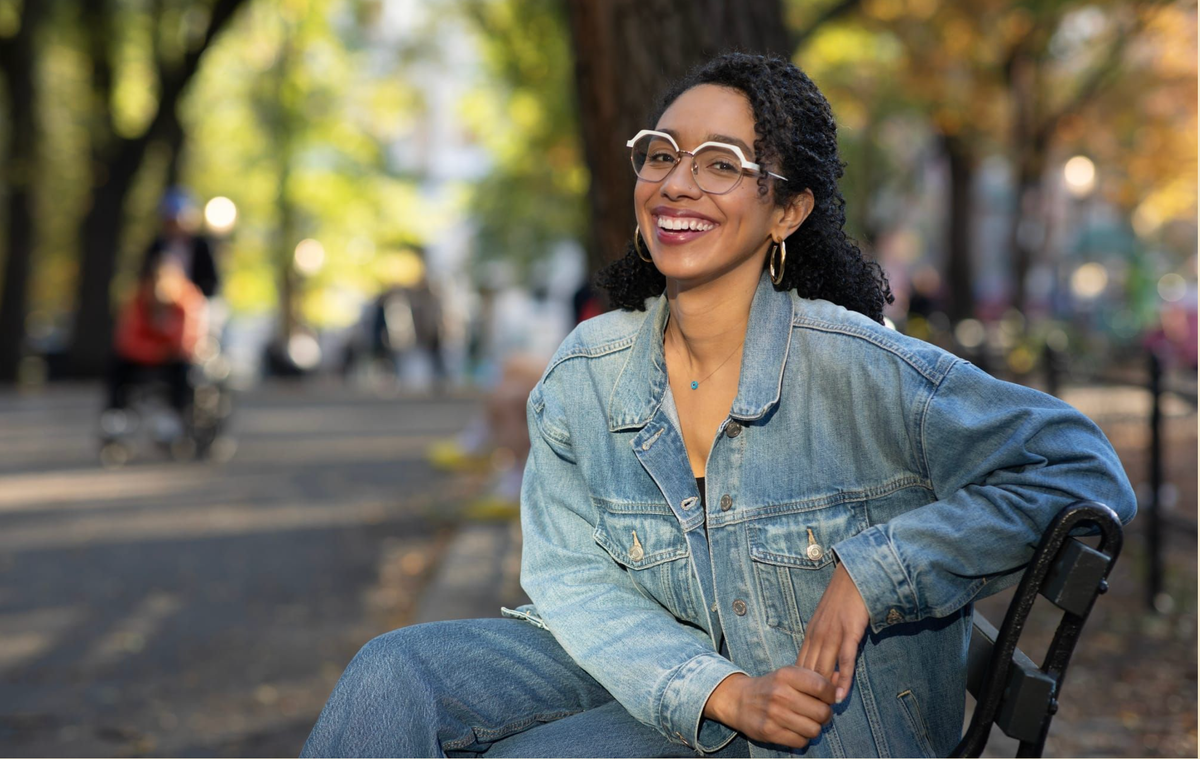
Barring some fluke, Darializa Avila Chevalier will head to Congress in January, representing upper Manhattan and a slice of the Bronx.
That district includes the historic German-Jewish hub in Washington Heights, a growing Jewish scene in Harlem, and two flagship educational institutions, Yeshiva University and the Jewish Theological Seminary. Around 7 percent of her future constituents are Jewish, according to data shared with me from a 2023 study.
So what happens when an anti-Zionist community organizer has to serve a big, fractured, Jewish constituency? I think that’s a relevant question not just to Jews in the Heights, but to anyone curious about how an activist-turned-member of Congress will approach relationships in the district.
One note of disclosure: I’m active in the Washington Heights Jewish scene and — unavoidably — have communal ties to some of the sources in this story.
“You Just Can’t Unsee Things”
In the June Democratic primary, Avila Chevalier defeated U.S. Representative Adriano Espaillat, who for years has made a point of emphasizing his ties to the Jewish community. Shortly after Espaillat first arrived in Congress, in 2017, he held an inaugural ceremony at Yeshiva University. The congressman has a longtime staffer, Laurie Tobias-Cohen, who described herself to me as his unofficial Jewish liaison.
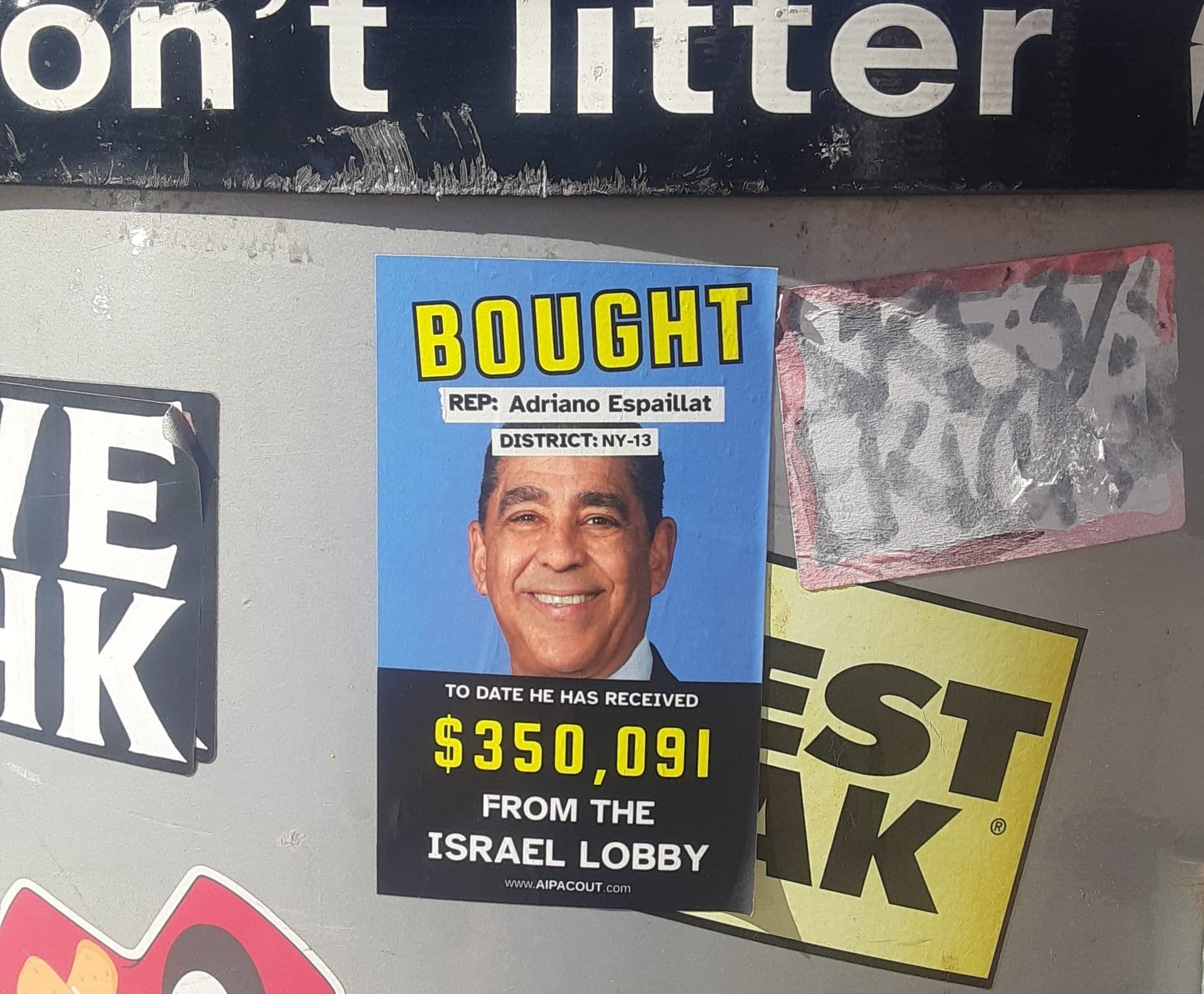
During his decade in Congress, Espaillat received extensive support from AIPAC, a pro-Israel group. Those AIPAC ties became a liability this spring as Avila Chevalier launched her primary challenge. Avila Chevalier is a Muslim and the daughter of Dominican immigrants. Israel and Palestine are central to her political journey. When I interviewed her in May, she spoke about spending time in the West Bank as a 20-year-old, where she witnessed the anguish of young children after an Israeli military raid. “You just can’t unsee things,” Avila Chevalier told me.
In the months after Hamas’ October 7 attacks in Israel, as Israeli airstrikes killed tens of thousands of civilians in Gaza, Avila Chevalier helped organize the encampments protesting ties between Israel and her alma mater, Columbia University. One focus of her campaign against Espaillat was the congressman’s backing from AIPAC.
Avila Chevalier’s anti-Zionist politics — and rhetoric — have alienated some members of the Jewish community. During the primary, she argued that Espaillat had been “handpicked” by AIPAC, which some Jews saw as echoing antisemitic tropes.
Then it emerged that Avila Chevalier had attended a rally on October 8, 2023, at which participants held signs supporting Hamas’ attack on Israeli civilians. Shortly before the election, two people in the Breuer’s community — an Orthodox group with a big synagogue on Bennett Avenue — circulated a letter urging community members to vote for Espaillat, describing Avila Chevalier attending the rally with “the bodies of Hamas’s victims barely cold.” (Avila Chevalier has said that she doesn’t support violence against civilians, but felt that it was important to show up for Palestinian rights as Israel began its military response.)
At a panel this month hosted by Jewish Currents, a left-wing magazine, Avila Chevalier explained that “as it relates to Israel and Palestine, I think this question of capitalism is really important, because even if we think about why the Zionist project chose Palestine, that was a question of economics, actually. It was a question of political geography.”
Left-wing journalist Peter Beinart, who was moderating, looked bemused. He noted that early Zionists were also motivated by Jews’ strong historical and religious relationship with that particular piece of land. Yes, Avila Chevalier acknowledged, “there was a narrative part” to the Zionists’ decision as well.
“Integral to Her Campaign at Every Level”
Many Jews have watched Israel’s actions in Gaza with horror, with some describing what’s happening as a genocide. There are left-wing Jews uptown who had reservations about Avila Chevalier; others supported her enthusiastically.
“I have friends and family whose perspective on Jewish safety is that a strong Israel is the best way to have safe Jews. I don’t agree with that,” said Lynn, a member of the organization Jews for Racial & Economic Justice who lives in East Harlem, and who asked that I refer to her only by her first name. Lynn told me that she had canvassed every week for Avila Chevalier between March and June.
She feels that a lot of the backlash against Avila Chevalier has been fueled more by misperceptions or misinformation than by any substantive concern about the candidate. People assume that when Avila Chevalier speaks about wanting rights for Palestinians, “that implies she wants life to be worse for Israelis,” Lynn told me. “She’s never said that! That’s not what I hear.”
The likely congresswoman’s main tie to the Jewish institutional world seems to be through the anti-Zionist group Jewish Voice for Peace. Ben Sadoff, a bike mechanic living uptown who organizes with JVP, told me that he has known Avila Chevalier for years. Jews, he said, “were integral to her campaign at every level.”
I asked him if he thought Avila Chevalier could and should work with Zionist constituents. “She should be responsible for all of her constituents,” he said, “and be honest with them about her belief in human rights and equality for Israeli Jews and Palestinians.”
Sadoff drew a distinction between legacy Jewish institutions and the broader Jewish community. Many — perhaps most — of the Jews in the district aren’t affiliated with synagogues or other traditional Jewish organizations. And others, Sadoff said, “are turning away from these institutions en masse over the last few years, as they’ve seen them cheerlead genocide.”
“She Doesn’t Really Understand the Jewish Community”
For other Jews in the district, a strong Jewish state feels essential to Jewish safety. Many have felt jolted by Avila Chevalier’s ascent.
Tobias-Cohen, the Espaillat staffer, described Avila Chevalier to me as an antisemite, and her politics as a “malignant hybrid of ultra-left policies and Islamism.” During the campaign, as a volunteer, she helped organize multiple events for uptown Jews, including a gathering of community leaders.
In a statement to me about Jews in the district, Avila Chevalier wrote that “I will fight for their safety and continue to oppose antisemitism without qualification.”
Other organizing has happened since the election. On a Tuesday evening last month, Daniela Jampel hosted around 40 community members in her apartment in Washington Heights. “People are very disoriented by what is happening in our district,” she told me.
For Jampel, a key moment came during the primary, when an interviewer asked Avila Chevalier about her ties to the Jewish community, and the candidate referenced her connections to JVP, which has long occupied the left fringe of communal Jewish life. “That showed me she doesn’t really understand the Jewish community, outside of the Jewish community she wants to interact with,” Jampel told me.
Jampel feels that Avila Chevalier’s rhetoric around Israel has contributed to anti-Jewish sentiment in the city.
Her September gathering pulled from Jewish groups across the district, and Jampel hopes it’s the first part of a larger effort to “try to organize ourselves as a group of Jewish voters” — partly with an eye to future elections, including the 2028 congressional primary, when Avila Chevalier is almost certain to face more centrist challengers.
Jampel helped organize a phone-banking effort that will take place ahead of Election Day, aiming to encourage voters to write in a name rather than vote for Avila Chevalier. The goal, she told me, isn’t to elect a Republican, but to “send a clear message that she doesn’t represent the interests of our district.”
Outreach
Over the past few weeks, I’ve spent time trying to understand whether Avila Chevalier’s team has made connections with any major uptown Jewish institutions. If she has, I wasn’t able to find much evidence of it. “Thanks for the laugh,” one community leader texted back when I asked if they’d heard anything.
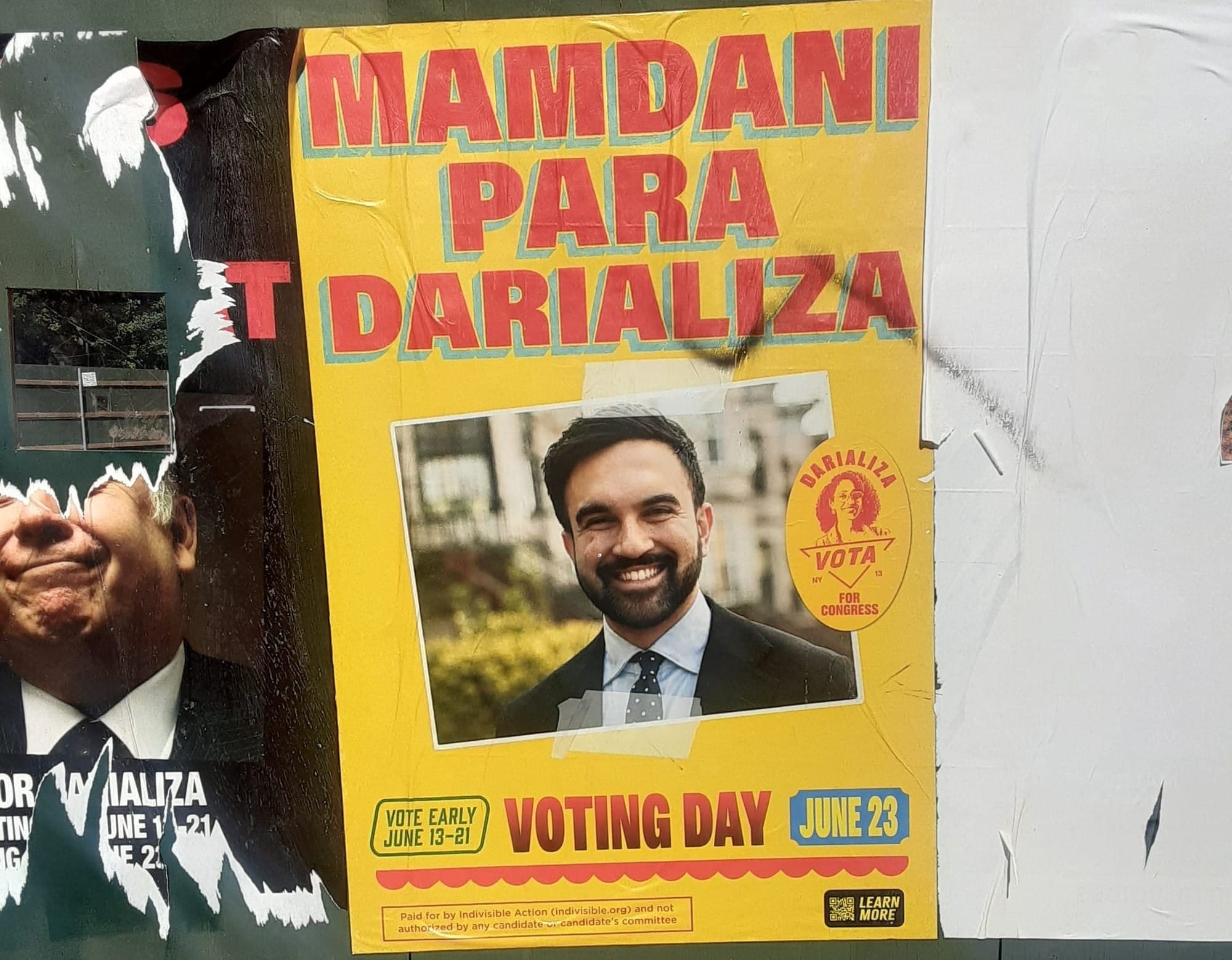
One progressive Jewish leader contrasted the approach to that of Mayor Zohran Mamdani, who endorsed Avila Chevalier and shares many of her political views. After the mayor won, this leader said, “he really reached out.” They’re yet to see the same approach from Avila Chevalier’s team.
Lexie Botzum, a rabbi and organizer in the Heights who’s active with Halachic Left, a group of observant left-wing Jews, told me, “I can’t get into a lot of detail. But there have been some attempts at outreach.”
Botzum noted that diplomacy goes both ways. For some people, she said, “there’s nothing she could do, short of disavowing her basic Israel politics, that would make her an acceptable person to engage with in their eyes.”
Johanna Garcia, the chief of staff to State Senator Robert Jackson, told me that she has been working to organize a meeting between Avila Chevalier and some uptown Jews. (She’s doing so outside of her official capacity.) “There’s definitely an interest on both sides,” she said.
Aryeh Kalb, a Modern Orthodox political-science PhD student who lives in the Heights, said that he’d been invited to the meeting. He’s politically progressive, but he opposed Avila Chevalier’s candidacy. “If you deny a Jewish connection to the land, you’re missing a fundamental aspect of Jewish identity,” he told me. “From what I know about her, the root of her politics is denying that.”
But, he said, he’d be glad to meet with her. “The fact that she’s open to that is encouraging.”
Avila Chevalier’s campaign said the candidate has done outreach to Jewish leaders and has “met with Jewish constituents across the ideological spectrum.” Their statement included a message from the candidate: “My organizing philosophy is rooted in a belief that every life is sacred and that every person deserves to grow up safe and in dignified conditions, including my Jewish neighbors."
UPDATE: This story has been updated to clarify that Aryeh Kalb is a graduate student.
Have a story tip? Email mhschulson@gmail.com, or message me on Signal (Schulson.17) or WhatsApp (646-279-6952).