One Primary, Two Candidates, and $1.7 Million
The Congressional primary heats up.
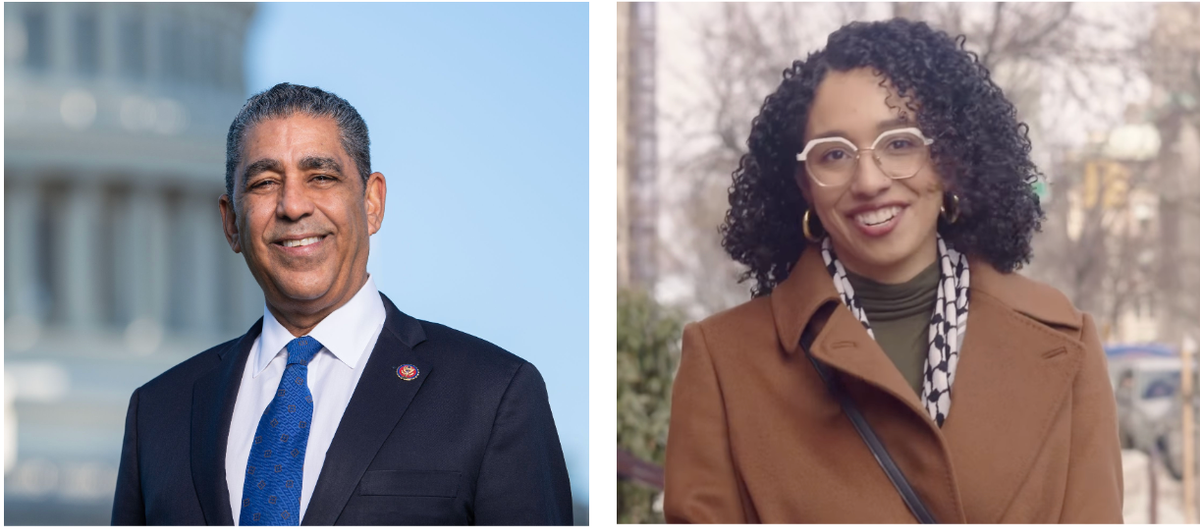
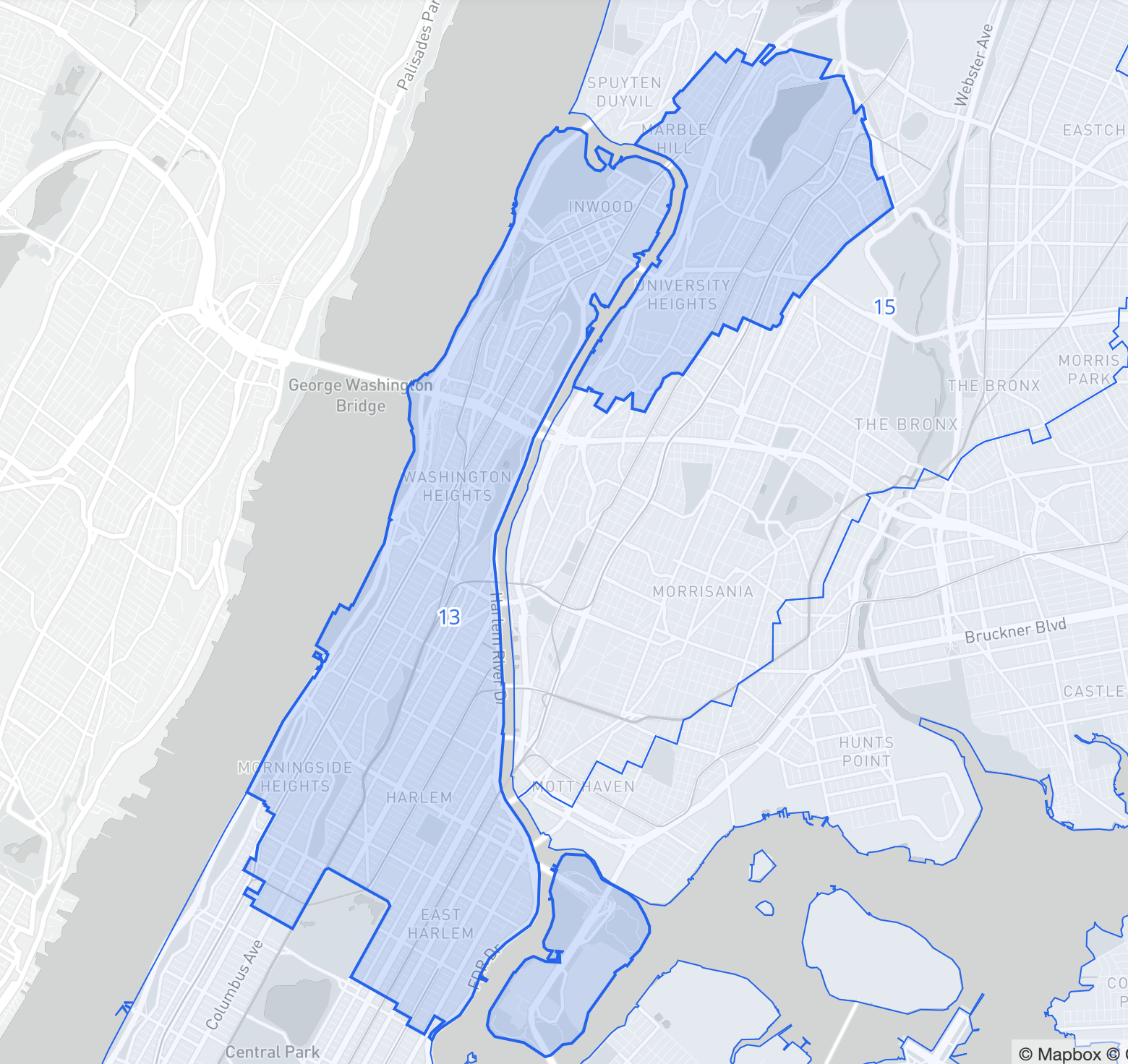
Adriano Espaillat arrived in Congress nine years ago, after winning the Democratic primary for our U.S. House seat by fewer than 900 votes and then breezing through the general election in this very blue district.
Since then, no challenger has gotten even close to unseating him.
Now, a democratic socialist named Darializa Avila Chevalier is trying to pull off an A.O.C.-style upset. Recent fundraising data suggests the challenge is real. But first, here’s some quick background on the candidates.
The Candidates
Espaillat is the first formerly undocumented immigrant and the first Dominican American to sit in the House. He spent 20 years as a legislator in Albany before his election to Congress, where he holds real status: Espaillat sits on the powerful House Appropriations Committee, and he chairs the Congressional Hispanic Caucus. The City recently described him as “the dean of Dominican elected officials in New York.”
During a candidate forum hosted by Uptown Community Democrats earlier this year, Espaillat pitched himself to voters as someone with deep roots in the district who has worked hard to bring home funding. “I’ve been fighting for this district for a long time,” he said.
Avila Chevalier is a community organizer whose parents are Dominican immigrants, and who describes herself as growing up in a working-class family. She studied at Columbia and helped organize the 2024 encampments there protesting Israel’s actions in Gaza.
In her campaign, she talks a lot about housing and U.S. support for Israel. “I'm a tenant running for housing for all,” she said at the candidate forum. “I'm an educator running to fund our babies, not bombs.”
A third candidate, Oscar Romero, is a city employee and fellow democratic socialist.
Who's Winning?
Nobody has published independent polls of the district, so there’s not much hard data to go by, but Espaillat’s the clear frontrunner. He has the backing of major unions and many local Democratic leaders, including the state attorney general, Letitia James, and City Council Member Carmen De La Rosa.
Avila Chevalier has the endorsement of the NYC Democratic Socialists of America, and she’s pulled in some real cash. Her campaign released a poll last week — take it with a very, very big grain of salt — showing her trailing the incumbent by 14 percentage points, and taking the lead once survey-takers heard more about the candidates.
Punchbowl News, a D.C. publication, reported this week that “top Democrats are less worried” about Espaillat than some other incumbents facing primary challenges, but that Espaillat is “taking new threats seriously.”
The Money
One way to understand the race is by looking at money. Donations to a candidate are public record, and the campaigns have to file a big report about them to the government every few months. The most recent batch came in last week. I’ve been poring through that data since, with help from an extremely generous professional data analyst in the neighborhood. (He’s asked to remain anonymous because he doesn’t have permission from his employer to mess around and make journalism.)
Funding has also become an issue in the race: Avila Chevalier has worked to portray Espaillat as beholden to corporate donors and pro-Israel groups.
Here are a few big takeaways.
Avila Chevalier is attracting donors, but Espaillat still has more money.
In the first quarter of this year, Avila Chevalier netted a bit more than $261,000. Espaillat raised just under $232,000. But, thanks to larger hauls last year, Espaillat has still raised more than three times as much as Avila Chevalier, and he has almost five times as much cash on hand.
Combined, they’ve raised more than $1.7 million so far. Some of that money is earmarked for use in the general election, not the primary.
Romero is lagging.
Oscar Romero has raised just $3,239, in addition to more than $8,000 that the candidate has loaned to his own campaign. I emailed the campaign for more context, but I haven’t heard back.
AIPAC is important for Espaillat, but it's not everything.
Avila Chevalier often criticizes the incumbent for taking money from the American Israel Public Affairs Committee, better known as AIPAC. “My opponent's biggest backers, the folks who fund his campaign — number one is AIPAC, and number two, it's corporate landlords,” she recently told the Uptown Voices podcast. In a February social media post, she described Espaillat as “AIPAC’s handpicked candidate.”
AIPAC money is nowhere near the majority of Espaillat's funding, but it is the largest single source of campaign dollars for him. We tallied $124,678 in donations that have come to Espaillat from or through the pro-Israel organization this election cycle.
Over email, I asked Tyrone Stevens, an Espaillat campaign spokesperson, why the congressman chooses to accept AIPAC donations. He didn’t respond to the question directly, but he did write that Espaillat “opposed Trump’s illegal war with Iran” and has “been outspoken about the need to protect civilians and surge humanitarian aid in Gaza.”
He also said the campaign “is rooted in real organizing on the ground, real relationships in the community, and a record of showing up and delivering.”
It’s not clear to me that Espaillat is getting so much money from corporate landlords. I asked the Avila Chevalier campaign for more detail on this, but they didn’t respond to questions before my deadline.
Espaillat is drawing on corporate donations and city powerbrokers.
Espaillat has received donations from a bunch of political action committees. Some of these are linked to progressive groups and labor unions. Many others have corporate ties, including PACs connected to Amazon, the pharma companies Novo Nordisk and Gilead Sciences, Verizon, Delta, and the American Bankers Association, plus at least five separate PACs linked to sugarcane and sugar beet growers. (Not sure why.)
These kinds of PACs tend to give to lots of candidates.
Other prominent donors include Emma Bloomberg, a philanthropist and daughter of the billionaire former mayor Michael Bloomberg; and Rodney Propp, chairman of the real estate investment and development firm Tahl Propp Equities.
Espaillat has lots of donors at KKR and NYP.
The congressman received at least $24,832.67 in individual donations from executives at KKR, a global investment firm with large private-equity and real-estate portfolios. And he received at least $40,300 in donations from current or former executives of the New York-Presbyterian health system.
Avila Chevalier isn’t getting money from corporate PACs, but she is getting dollars from Ms. Rachel.
Avila Chevalier has gotten support from Justice Democrats, which is backing several candidates challenging Democratic incumbents from the left, and from the Peace, Accountability, and Leadership PAC, or PAL PAC, which describes itself as committed to "ending Israel's ongoing human rights abuses against Palestinians."
Other donors include Adelaide Park Gomer, an heir and progressive philanthropist in upstate New York, and Aron and Rachel Accurso, the popular children’s entertainer who goes by Ms. Rachel, and who has become a prominent advocate for children in Gaza.
Most of the money is coming from outside of the district.
All politics is local, they say. But for both candidates, the majority of donors to their campaigns don’t actually live here.