A Deadly Poison Returns
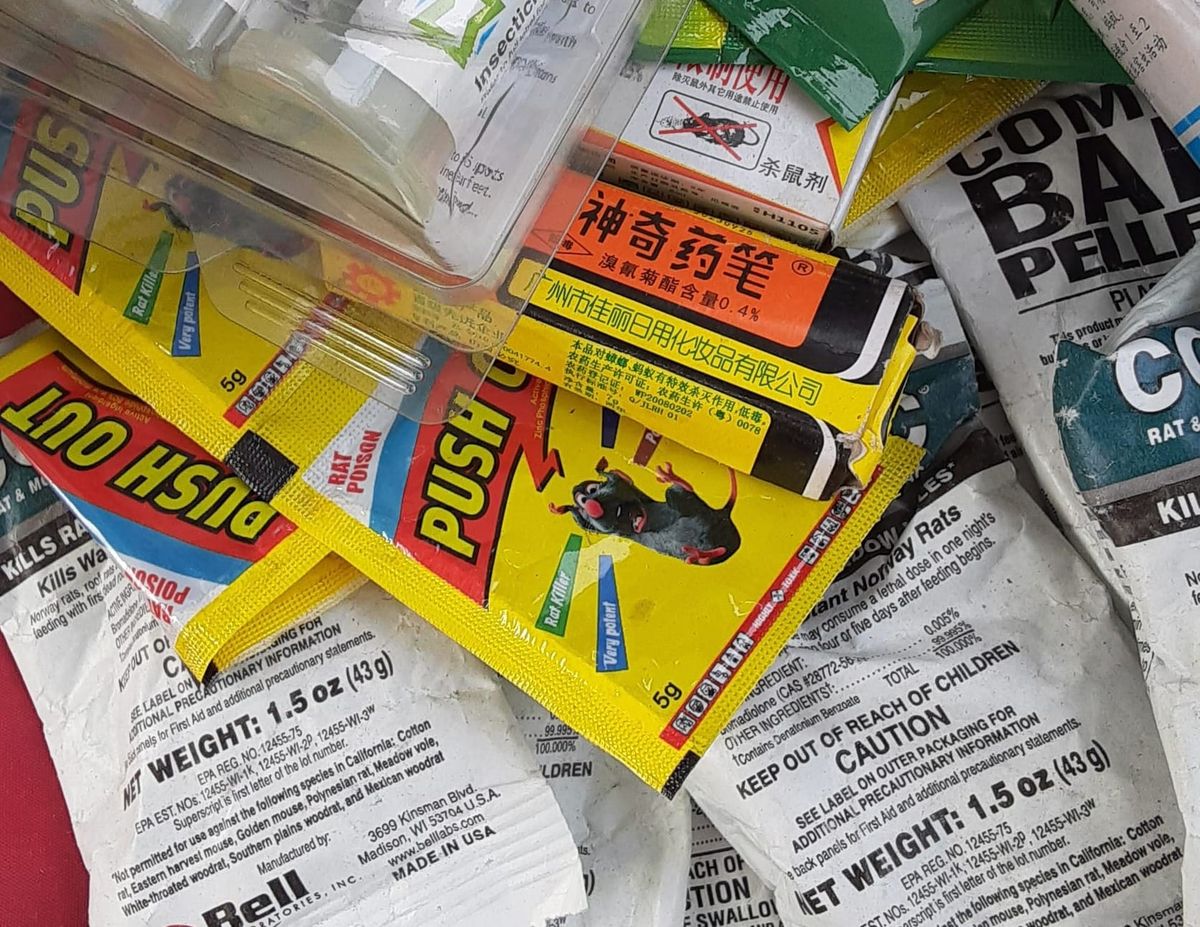
Zinc phosphide is sold widely in the Heights, in brightly colored packets that resemble candy.
Zinc phosphide is a rat poison that generates deadly gases when it’s exposed to water. It’s dangerous enough that federal regulations mostly limit its use to professionals.
It’s also sold widely by street vendors in Washington Heights, in brightly colored packets that resemble candy.
Last spring, local City Council Member Carmen De La Rosa held a press conference urging people to get rid of their zinc phosphide. She was joined by physicians and a representative from the Street Vendor Project, an advocacy group for vendors. “We want our families and street vendors safe!” De La Rosa’s office posted on social media.
After that outreach push, according to one of those doctors, the product vanished from the local market for a few months.
But zinc phosphide is now back.
“A pending disaster”
The person responsible for much of the recent attention to zinc phosphide is Adam Blumenberg, an emergency medicine physician at Columbia University Medical Center who specializes in poisons.
Blumenberg has what he describes as “a weird hobby”: He likes to scope out the ingredients in products, browsing pharmacy shelves when he travels and checking labels. After he moved to the neighborhood in 2020, he’d sometimes explore the street stalls near the intersection of 181st and St. Nicholas, where it’s possible to buy everything from aphrodisiacs to antibiotics to pesticides.
Not all those goods are strictly legal. Blumenberg felt concerned about one of them, Sniper roach poison, which contains DDVP, a relative of sarin gas. But there was nothing so dangerous that he felt compelled to alert the authorities.
Then, in March 2025, Blumenberg noticed bright yellow packets on many vendors’ tables. The product was called Push Out, and each package featured a cheery image of a rat that looked an awful lot like Remy, the spunky rodent chef in the Pixar film “Ratatouille.” According to the package, the stuff was 80 percent zinc phosphide.
Blumenberg had a visceral reaction. “I recognized this as really just a pending disaster,” he told me.
He called 911. He emailed reporters. He contacted De La Rosa’s office. And he began circulating flyers in the medical center, telling health care workers to be on alert.
The Risk
As long as it’s kept dry, zinc phosphide doesn’t pose much of a hazard. But when it’s exposed to water, the substance converts into highly toxic phosphine gas.
That creates problems when someone puts out the pesticide for rats and it accidentally gets wet. In 2017, phosphine gas killed four children in Texas after someone sprayed water on an area where a related pesticide, aluminum phosphide, had been applied.
The gas also sickened several first responders, who reported symptoms including “irritability, ocular pain or burning, headache, nausea, drowsiness, dizziness, burning of nose or throat, abdominal cramps, diarrhea, generalized weakness, trembling legs or hands, and trouble walking,” according to a government report about the incident.
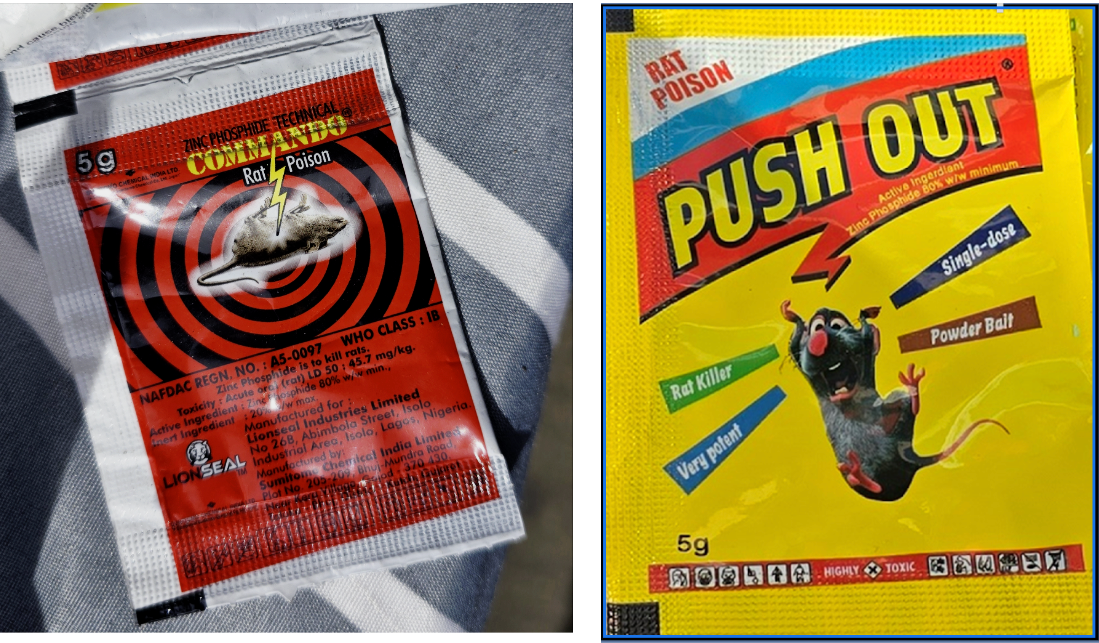
Not surprisingly, the chemical is also very dangerous to eat, because the liquid in the stomach of a rat — or human — converts it to phosphine gas.
I went for a walk with Blumenberg last month, and we passed several vendors selling packets of Push Out and another zinc phosphide product, Commando, which comes in a red package. “It’s upsetting,” Blumenberg said. “Every one of those represents a potentially fatal dose for a person.”
From India to Nigeria to Washington Heights
Push Out takes a long journey to get to the Heights.
The base chemical appears to originate in India. The product itself is manufactured by the Global Alliance for Chemical Industries in Ibadan, Nigeria, a subsidiary of the Jubaili Agrotec Group.
I called GACI’s main office in Nigeria, and they referred me to someone named Maxwell. (During a 12-minute call, he declined to share his full name or specify his role with the company). I also exchanged messages on Whatsapp with an agricultural engineer who works for Jubaili, and with a number linked to Jubaili’s main office in Dubai.
All of them told me that Jubaili does not export Push Out to the United States. “We are supplying this product only in some african counties where it was registered legally,” the engineer wrote. “We don’t operate in USA and we have no idea how it arrives there.”
Maxwell questioned whether the product was even Jubaili’s; counterfeit Push Out, he said, circulates in Nigeria. (For what it’s worth, Blumenberg believes the packets for sale in New York City do contain zinc phosphide, based on details of a poisoning case elsewhere in the city.)
The road from Nigeria to New York City is murky. Two vendors on St. Nicholas Avenue told me that they don’t go out somewhere to buy it; they have suppliers who bring products to them.
Supply and Demand
Blumenberg doesn't know whether zinc phosphide has harmed anyone in the Heights. And part of what makes zinc phosphide poisoning so dangerous, he said, is that it’s hard to diagnose. Doctors may never realize what sickened or killed their patient.
The state Department of Environmental Conservation, which regulates pesticides, periodically conducts raids. The agency told me the last big action in the neighborhood was in July 2024. “During the pesticide seizure events, many of the individuals maintaining the tables containing the illegal pesticides fled the scene leaving the illegal pesticides behind,” the agency wrote. They confiscated thousands of items but didn’t issue any tickets or summonses, and say they’re mostly focused on community education.
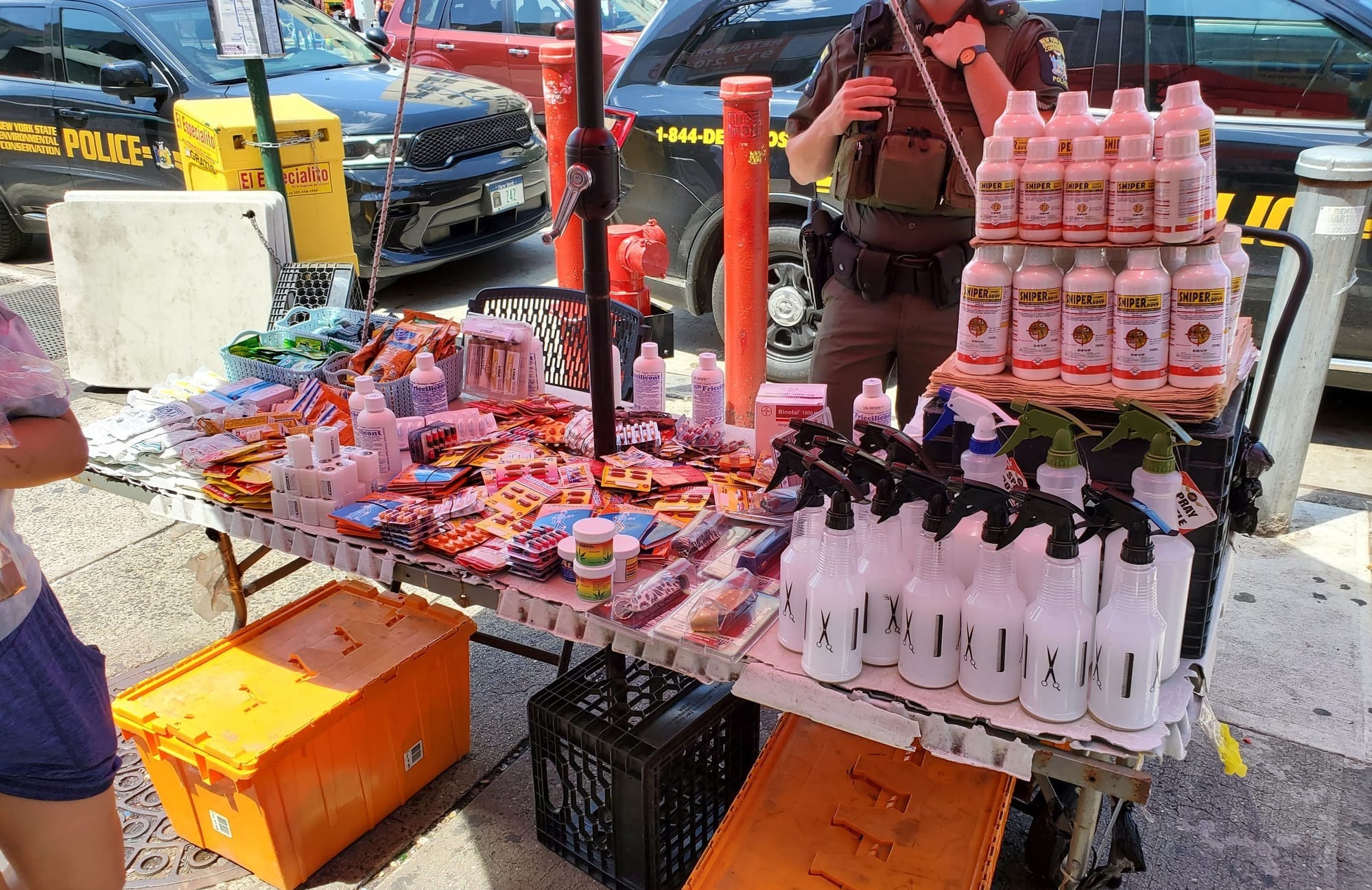
I asked the agency if they had any insight into how Push Out was getting from Nigeria to New York City. The response: nothing to share yet. “DEC and other agencies are actively investigating the source of how these illegal pesticides are entering and being distributed throughout New York City and other regions,” their statement said.
One pesticide vendor told me he doesn’t sell Push Out both because it's dangerous and because he’s worried about the authorities. But earlier this week, I counted seven vendors openly selling Push Out on tables in the neighborhood. Another vendor, when I asked her about Push Out, reached into a plastic bag beside her table and pulled out a zippered pouch filled with the yellow packets.
It's not clear that targeting people who sell pesticides for a few bucks from folding tables really does much to keep the community safe. “Law enforcement might tackle supply, but they have a really hard time with that, because they could do a raid or a bust and then it comes back,” Blumenberg said. He's focused on the demand side: "You let people know this stuff is hazardous and they won't buy it, right? People don't want to put their families in danger.”
The NYC Poison Center is available 24/7 to answer your questions about zinc phosphide, DDVP, and other chemicals: 212-764-7667.