All About 2-K
A civic experiment arrives.
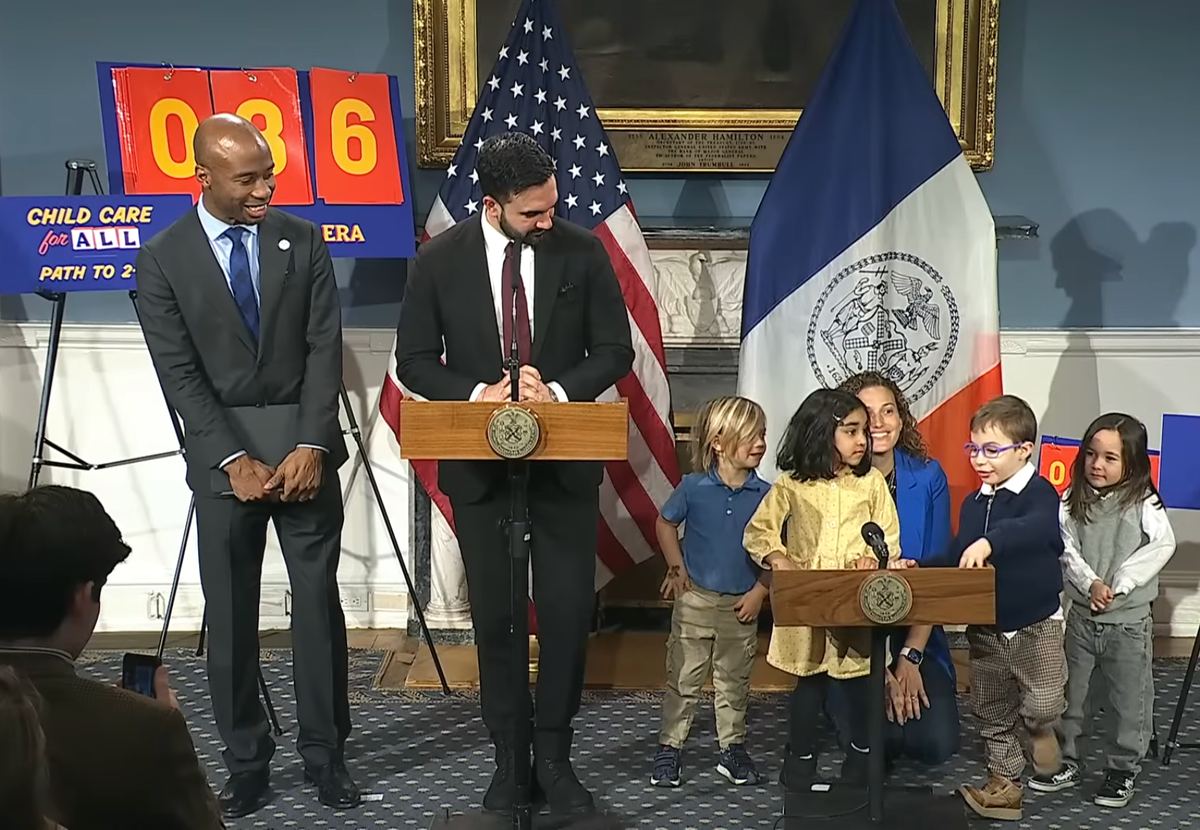
Zohran Mamdani campaigned for mayor on three big promises: Freeze the rent. Fast and free buses. And free childcare.
The rent’s not frozen — yet. Bus rides still cost $3. But a major expansion of free childcare is underway, offering a first big test for Mamdani and the democratic-socialist movement that brought him into office.
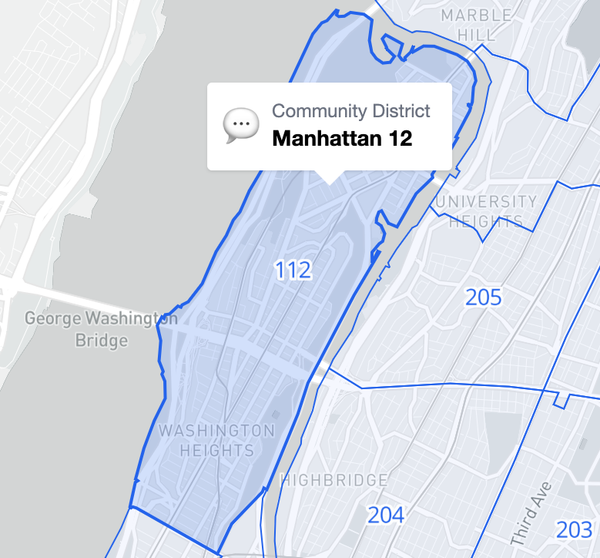
And it’s playing out here in Washington Heights. Ours is one of the neighborhoods selected to receive free childcare spots for 2-year-olds as part of a pilot program, meaning a bunch of families in upper Manhattan are about to get an unexpected public benefit worth around $15,000 to $20,000.
The Heights is one of the last places in Manhattan where it’s even remotely affordable(-ish) for a normal person to raise a child. I asked Emmy Liss, the mayor’s childcare czar, whether to think of the program primarily as a way to keep middle-class families from fleeing the city, or as a way to support families who are facing poverty. “I don't think it's either/or. I think it's everybody, and that's the point of it being a universal program,” she said. “With the high cost of childcare today, we know that childcare affordability is something that impacts everyone.”
To get the program off the ground, however, the city will have to negotiate a tricky timeline and win over providers.
How’s it going to work? And why us?
How the Heights Got 2-K
Pretty much everyone agrees that childcare is crushingly expensive in New York City. Last year, the Comptroller’s office estimated that daycare here is comfortably affordable only for households bringing in at least $334,000 per year.
In this neighborhood, a year of care for a 2-year-old can easily cost north of $20,000. Some families pay more for childcare than rent.
In 2014, under Mayor Bill de Blasio, the city introduced universal pre-K for 4-year-olds. A free program for 3-year-olds came along in 2017. It has changed life for parents of young kids in the Heights: During the last school year, there were 933 children enrolled in 3-K programs in District 6, according to the NYC Independent Budget Office.
Earlier this year, Governor Kathy Hochul and Mamdani announced a plan to offer free 2-K to 2,000 children in fall 2026, with the aim of expanding to 12,000 children by fall 2027. The city is offering those slots in four parts of the city, including School District 6, which covers Washington Heights, Inwood, and Hamilton Heights.
Led Black, founder of The Uptown Collective and co-host of The Uptown Voices podcast, recently asked Mamdani why we made the cut. The goal was to start “in the neighborhoods of the highest need,” the mayor responded. In Washington Heights and Inwood, “we’re seeing a lot of families that are being priced out of childcare,” he said. Also, childcare providers in upper Manhattan have more capacity to take on the new seats, making it feasible to launch quickly.
“The need is very intense” in upper Manhattan, said Anjini Ramnarine of University Settlement, a nonprofit that works with around a dozen childcare providers in the area.
The Nuts and Bolts
Liss told me there’s no means test for the program: “As long as your child is turning two in 2026, and you live in one of the districts, then you have the same priority.”
Unlike free 3-K, which often ends in the mid-afternoon and takes a summer break, most 2-K families will receive full-day coverage, year-round.
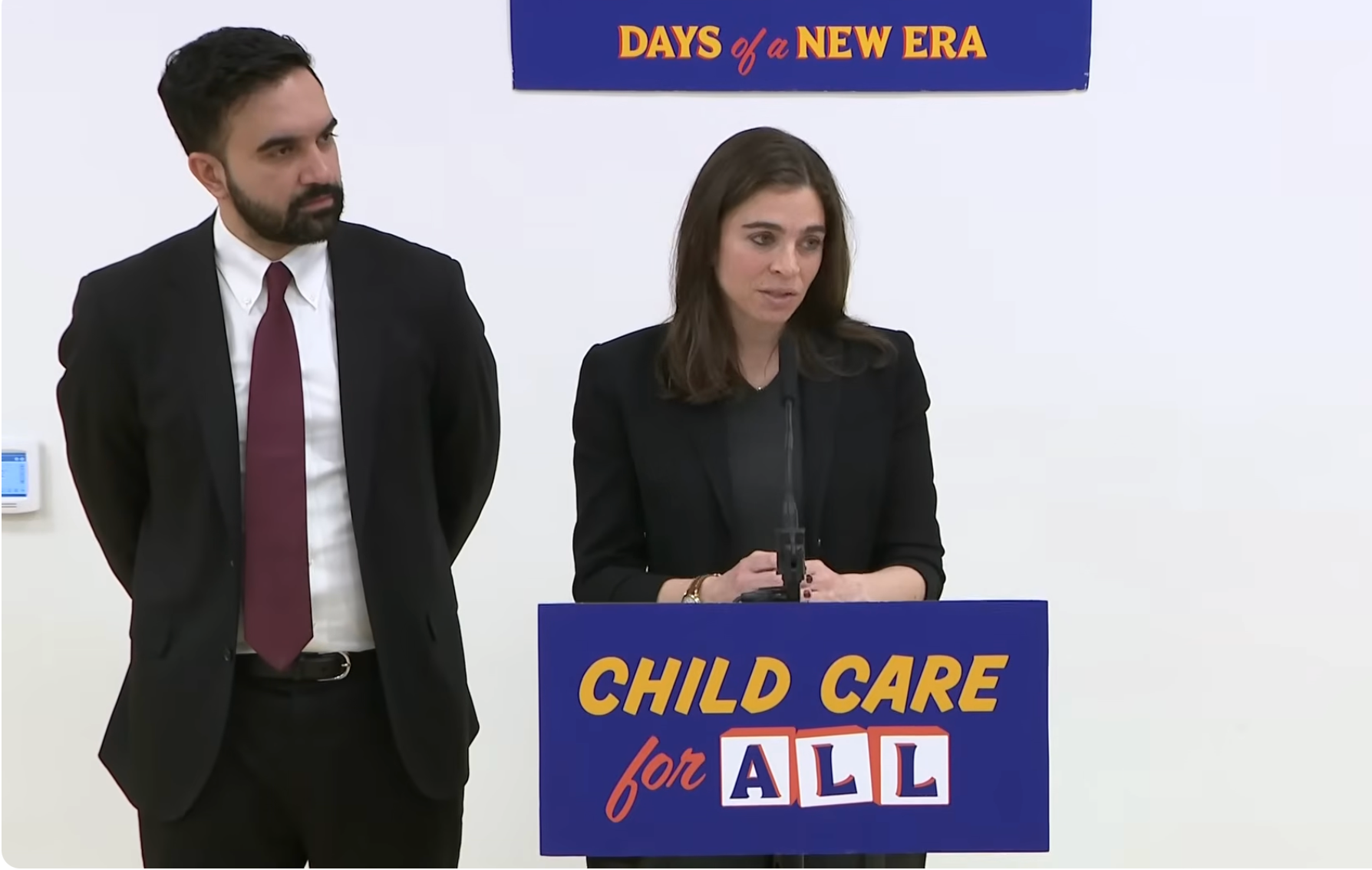
The application opens on June 2 and closes on June 26. Families will learn in early August whether they got a spot.
Liss said the city has not yet determined what portion of the 2,000 slots will go to District 6 families. It’s not clear how many families here will apply for 2-K — the program is brand new, and parents are sometimes hesitant to put younger kids in care if they can avoid it.
Also: The timeline for the roll-out doesn’t necessarily line up with how parents figure out childcare for their kids. Many families are already registered to start new preschool programs in the fall, or they’re already enrolled in a daycare and might expect to stay.
“How is this gonna work?” one uptown childcare provider asked when I called her this week. She already has lots of children registered for fall 2026. If her program participates in 2-K, would those children be guaranteed a spot, or would she have to boot them into a lottery and start over from scratch? “I certainly don’t feel comfortable doing that,” she said.
Liss didn’t have any specifics to share yet. “Our goal is to make sure that every family who applies, that we’re able to match as many of them as possible with a seat that works for them,” she said.
Providers’ Perspectives
The city itself is not running daycares. Instead, parents will enroll in childcare programs through the Department of Education, and the city will pay providers a certain rate per child.
Many of those providers are immigrant women, who often work long hours for little pay, in businesses that run on tight margins.
Not every daycare is eligible. For 2-K, the city is working with established community organizations and home-based daycares. To participate, those smaller daycares must belong to something called a Family Child Care Network, an organization that provides some support to individual daycares and acts as a kind of go-between for small operators and the city.
As Chalkbeat reported last month, that’s a challenge: Many of the city’s 6,500 home-based operators are not currently part of a network, and some are skeptical of joining.
Even those that are part of a network may have hesitations about 2-K. Lynda Diaz is the owner of Rainbow Room Daycare, which has been on Magaw Place since 1993. Her daycare is part of a network, and they participate in city 3-K. But, for now, she’s holding off on 2-K. Working with younger children is more challenging, she said, and she doesn’t believe the city will reimburse her at a workable rate—or at least not one that’s competitive with what she could make from parents who pay out-of-pocket. She added that her current 3-K program stays afloat only because parents pay extra for extended day coverage.
Other operators are jumping in. Zuleika Gavilanes, who runs The Learning Clubhouse Daycare on Hillside Avenue, told me she had been independent from family childcare networks for close to a decade. But she recently joined a network in order to participate in both 2-K and 3-K programs, and she expects to have some slots this fall.
Gavilanes founded her daycare to provide affordable options for families, and as city-funded programs expanded, she said, participating in them felt important for her business. “If you were not part of a network, or if you didn’t have a direct contract with DOE, it definitely started closing doors for us,” Gavilanes told me.
She’s nervous about the new arrangement with the city. What if her expenses go up, for example, but she’s locked into a city contract at a certain rate? Still, she’s excited to be part of the program. “We do have a lot of parents that do need this support,” she said.
Liss said the response from many providers had been positive, and that they’re working hard to include many home-based daycares in the program. “Making sure that family childcare providers have a real opportunity to participate in this program is a top priority for the administration and for me personally,” she told me.
“Childcare should be a public good,” Liss said.
Disclosure: I have children enrolled in local public schools and childcare institutions.