The Challenger
An interview with Darializa Avila Chevalier.
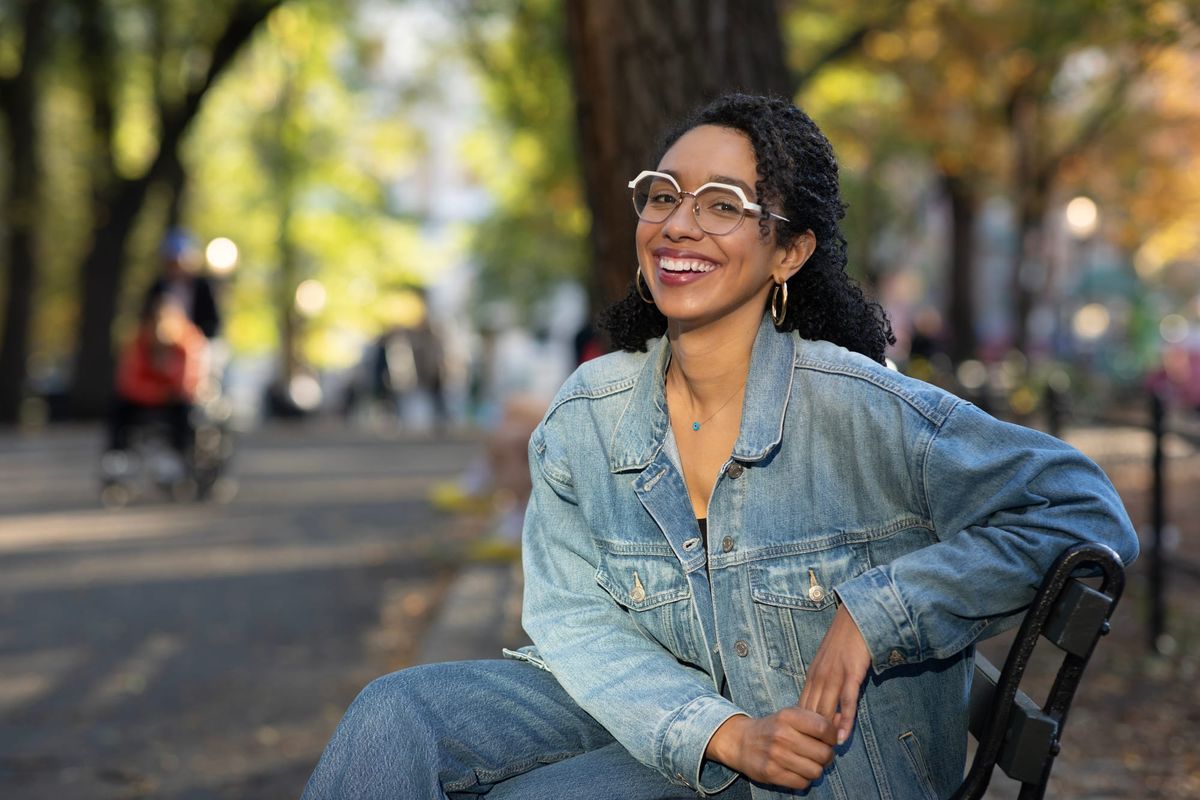
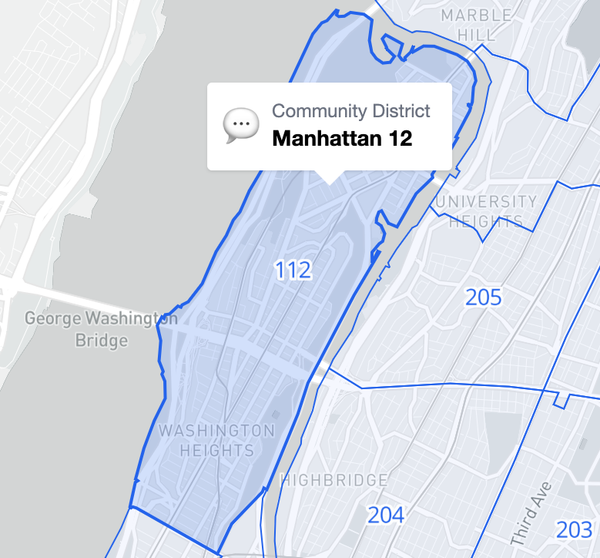
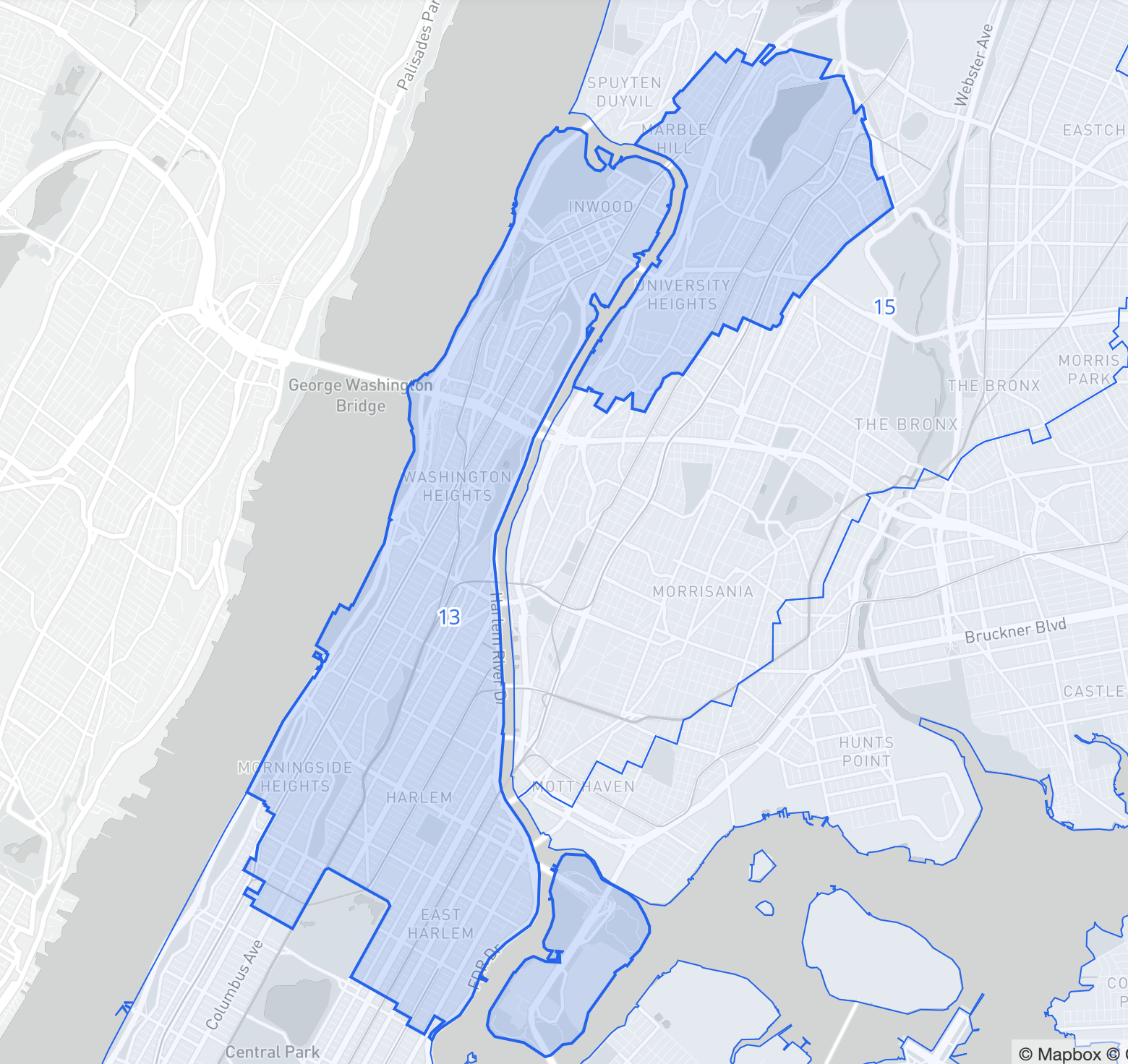
Darializa Avila Chevalier is a 32-year-old organizer and democratic socialist running to unseat U.S. Congressman Adriano Espaillat, whose district includes the Heights. He has held elected office for nearly as long as Avila Chevalier has been alive.
Espaillat is the clear favorite to win the Democratic primary in late June. But there are reasons to take Avila Chevalier's campaign seriously. She out-fundraised Espaillat in the first quarter of 2026. And voters in this Congressional district backed Zohran Mamdani, another up-and-coming democratic socialist, over Andrew Cuomo in the mayoral race last year.
I met up with Avila Chevalier in Harlem on a summery evening earlier this week. We sat on the grass in Marcus Garvey Park and talked about housing policy, defense spending, her conversion to Islam, and how she’d differ from Espaillat if she were elected to the U.S. House of Representatives.
One note: I've also asked the Espaillat campaign for an interview. I'll devote an issue to that conversation if they agree to it.
This interview has been edited for length and clarity.
The Lighthouse Washington Heights: Representative Espaillat says he wants to abolish ICE —
Darializa Avila Chevalier: He wants to dismantle ICE.
Or dismantle. How do you think about the difference there?
I'm not entirely clear, even now, what dismantle means, because he's being very vague, and he's saying he just wants to restructure and strip funding from ICE. But he's not giving specifics on what that means.
You feel like he’s backing off?
Yeah, totally.
Espaillat has a reputation for being one of the most progressive members of Congress. Could you describe a couple specific issues where you would vote differently from him if you were in Congress?
With ICE specifically, for example, he's voted to fund or give over $8 billion to DHS and ICE. That's not something I would do. [Note: After the interview, the campaign sent me examples of several bills that Espaillat has voted for which funded multiple agencies, including the Department of Homeland Security, all from before Trump’s second term.]
For somebody who is the chair of the Congressional Hispanic Caucus to not have the political backbone to be able to say “abolish ICE” in this moment, I think this is political cowardice.
[Avila Chevalier brings up the activist Mahmoud Khalil, who was arrested by federal agents at his building in Morningside Heights last year].
When Mahmoud, who is a friend, was taken from this district, he was Espaillat’s constituent. [Espaillat] gave two sentences on the issue. He said that he hopes that the Department of Justice would follow the rule of law, which they were not doing on the basis of having kidnapped him.
What would you have wanted to see from a member of Congress at that moment?
I would have wanted a member of Congress to support Mahmoud. The fact that [Espaillat] turned his family away, and that he turned many of our friends away who were trying to advocate for him, is telling not only on how he felt about Mahmoud specifically as a Palestinian, but his lack of interest in actually fighting for immigrant communities.
For [Espaillat] to not understand the impact that would have on immigrants everywhere is unconscionable. It shows a lack of understanding of the moment that we're in. It shows a lack of understanding of who we're dealing with in the White House, and shows a lack of understanding of the immigration system itself.
What is the moment that we're in?
We're in a moment of rising fascism.
Why do you use that word?
Because the president is a fascist. The fact that he is using an institution like ICE as a police force to terrorize communities, without any respect for the rule of law, is evidence of that.
Rent is obviously a huge issue in the district. There's this ascendant idea, especially in the Democratic Party, that the fundamental problem is that there is not enough housing. The remedy, according to some, is to remove barriers and build, build, build. Do you think that that's a good understanding of what the problem is?
I think it's an incomplete understanding of what the problem is.
How so?
The condition that NYCHA residents are forced to endure is deeply shameful to all of us. [NYCHA stands for the NYC Housing Authority, which provides public housing in the city.] And it has gotten this bad because of a lack of federal funding — decades of disinvestment.
We need a Green New Deal for public housing, because we need to make sure that we can bring it back to what it was meant to be, which was a pathway to the middle class.
I want to return to part of my previous question, about private developers building a lot more stuff — some affordable housing, some market rate. How much do you align with the movement in the Democratic Party that’s saying we need to be building a lot more?
Part of why I like to focus on NYCHA is because we have so many vacant units. If we were fixing those up, we would have more people seeking to live in NYCHA, not using it as a last resort, which would have an impact on the market as well.
When I look around at these new developments, more and more, I'm seeing them stopping at two bedrooms, which to me is a sign that we're not building for families. We are pushing families out of the city.
There's a conversation to be had about build, build, build. There's also a conversation to be had about, Who are we building for? Because it’s not the families who live here.
Your campaign has described Espaillat as AIPAC’s handpicked candidate. Could you explain what you mean by that?
I mean, that's his number-one funder.
What does it mean to be handpicked?
If you're the only candidate that is receiving money from them and has been receiving money from them for years, that's your candidate, that's your guy. That's it. That’s his number-one funder by far.
I think some people are going to hear that as, like, the Jews picked Espaillat. Is that the intention behind the language?
No. I mean, by that logic, then I'm Jewish Voice for Peace’s handpicked candidate. [JVP is an anti-Zionist Jewish group that has endorsed Avila Chevalier.]
Like in any community, there is a diversity of opinions within the Jewish community around Zionism. I think it's actually deeply problematic to conflate an entire community in that way.
He is corporate real estate’s handpicked candidate. … You pick ‘em — you pick your candidates, and then you donate to them, and that's how that works.
You're running to represent Washington Heights, which has a large and historic Jewish community. I think for a lot of Jewish voters here, there's a real sense that the existence of an independent Israeli state is crucial for their safety, and for the safety of their loved ones. How do you speak to the concerns of those voters?
I deeply believe that there is no such thing as safety without human dignity, and if we cannot afford all people human dignity, then we're not talking about safety. I believe that we have to always be fighting for human dignity and equality for all people, and I just don't believe that there is any way to have that at the exclusion of other people.
I think a lot of people would say, That sounds beautiful, but I feel scared for my life.
I've spent the last three years watching people be killed in the most horrific ways, and I just don't understand how that can mean safety for anybody.
I worry deeply that the framing we have in our society, that insists on safety being predicated on other people's suffering, is one that takes away our own humanity from us.
You're an alum of Columbia. As the protests there were building after October 7th, why did it feel important to you to go back?
I actually had a relationship with students before that, and I've been organizing on that issue for a really long time. They asked me to support, so I did.
I spent time in Palestine when I was 20, and it was a very formative experience for me.
How so?
You just can’t unsee things. I was there working at an organization that was focused on early-childhood education, and I was teaching English to some very small cutie patooties.
I walk in one morning into that classroom, and they're all sobbing and in hysterics. My Arabic was not great. I didn't really know why everyone was sobbing and in hysterics, and I was just in a state of utter shock and confusion, and I asked one of the other staff what was going on. And they told me that there had been a raid in the refugee camp near the school facility, and that a lot of the children's parents had been detained in the middle of the night. None of them had slept, and the anguish that I could hear in these children's voices shattered me.
You're describing a set of experiences that happened halfway across the world. How does that shape your political formation, and why is that relevant to voters here in Upper Manhattan?
We spend so much on systems of dehumanization.
Why do we spend so much money and energy and infrastructure on harm, when most people, all they want to do is live? Why don't we instead spend our resources on investing in life? When I was deciding whether running for office was something that made sense for me to do in this moment, the thing I kept coming back to was, How do we invest in our babies here? When we spend trillions of dollars on the war machine, why aren't we investing in our schools? Why are we letting over 100,000 public school children go hungry and be unhoused? Why are we insisting on a politics of death when every single one of us, all we want to do is live and watch our children live?
What should the U.S. spend on the military?
There's so many ways we reinforce this machine of death. And we continue to send more weapons and more bombs year after year, and year after year, we continue to defund our schools.
We continue to cut SNAP and cut Medicaid and refuse to invest in a Medicare for All, single-payer healthcare system.
I can hear people saying, Russia and China will take everything over at that point — that this is, in some way, a gift to authoritarians around the world.
We spend so much money on so many authoritarian regimes, backing them. My grandfather was part of the resistance to two U.S.-backed dictatorships in the Dominican Republic. To me that argument doesn't hold much water.
I'm always curious about people's political formation, but also their religious formation. I've heard you talk about converting to Islam. I was wondering if you could speak a little bit about how you came to do that, and what that has meant for your life.
I came to Islam through organizing. I saw just the way a lot of my Muslim friends were showing up in spaces we shared, and that kind of drew me to explore it more, and I started fasting for Ramadan one year. And after four years of doing it, one of my good friends, she was like, Darializa, what are we doing? Are you converting? What's the hold-up here?
My hesitation came from being an adult coming into what I felt might be a completely new way of operating, and way of being. And I was at a halaqa — which is like a Quran study, essentially — and the Imam said, Allah introduces himself to us in the Quran as the most gracious and the most merciful. That is what He will always be, and whenever you feel lost, come back to that. And in that moment I just felt, okay, like that was what I needed to hear, that at the heart of all of this is grace and mercy, not just in the way that we show up in the world as Muslims, but in the way that I can live my own humanity.
I think so much about, what does a politic that centers grace and mercy look like? Because we're deeply flawed, like humans, we are so deeply flawed. And without that we have no space to do better. We will always be the worst thing we've ever thought or done or said, and I just don't feel that that is what we should be defined by, because that's not the way my God defines me.
One final question: Are you willing to have a debate with Espaillat?
I would love to do a debate with Espaillat.