Our Neighborhood Tyrant
How did a British colonial governor's name end up on a New York City park?
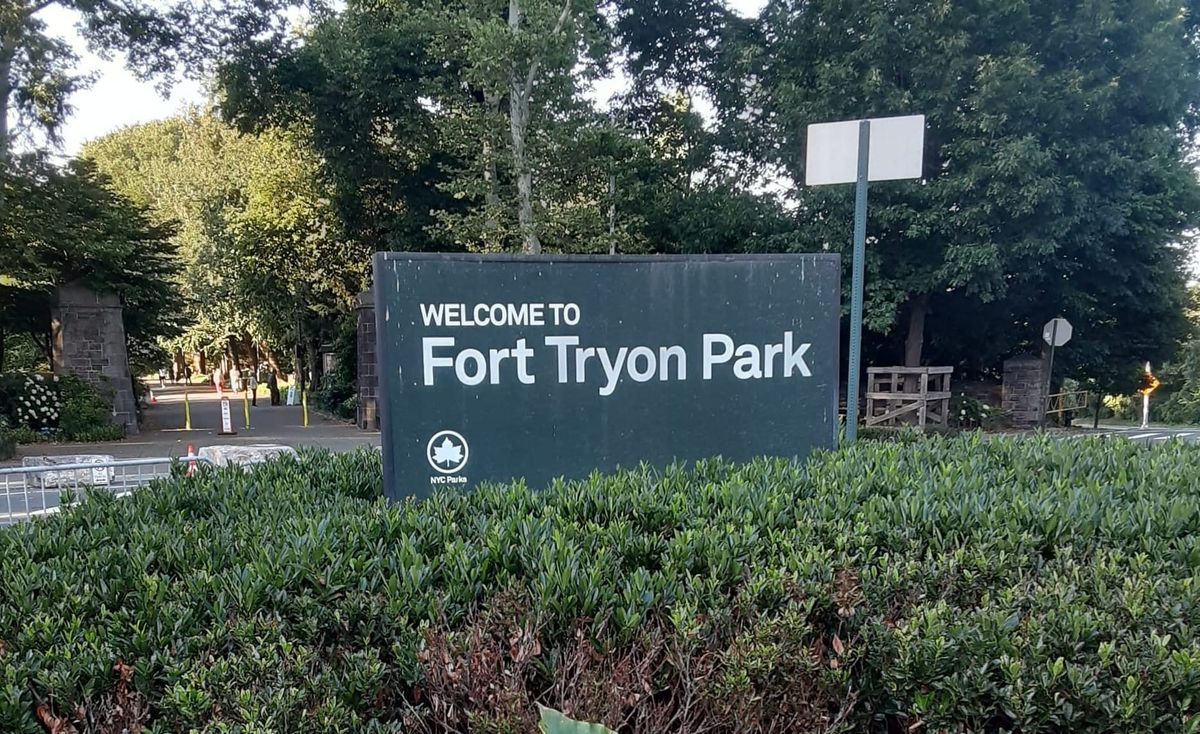
Next week, many residents of the Heights will celebrate the Fourth of July in a park carrying the name of William Tryon — a British colonial governor who tried to squash the American Revolution. Tryon also burned down much of Danbury, Connecticut, and he may have tried to assassinate George Washington.
“It’s like a John Wilkes Booth Park,” said Paul Epstein, a documentary TV producer in the neighborhood.
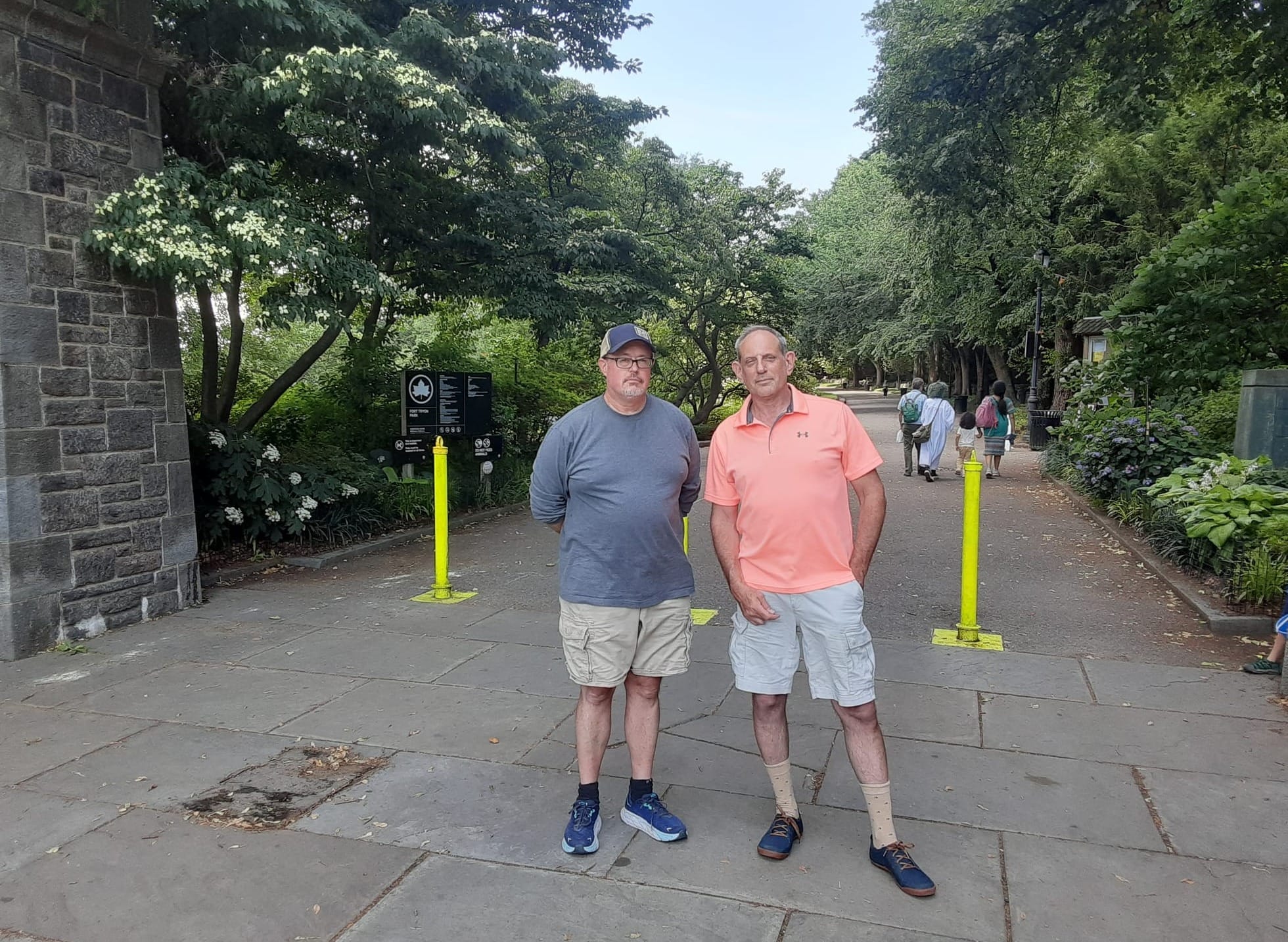
Recently, Epstein and Neal Shultz, a retired teacher and local historian, have been digging into the tangled history of the park. As the United States gets ready to celebrate its 250th birthday, they’re making the case that it’s time to rethink the name.
Our Local Tyrant
Tryon was a well-connected British soldier. In 1764, he became the governor of North Carolina, where he built a palace and violently suppressed rebels who viewed their leaders as corrupt. He moved north in 1771 to take the helm in New York, where he tried to quell growing discontent with British rule.
Many historical accounts connect Tryon with a failed plot in 1776 to either kidnap or assassinate George Washington.
In 1777 and 1779, Tryon led raids on Connecticut, intending to destroy patriots’ stores. His troops burned down civilian homes and destroyed parts of Danbury, Norwalk, and Fairfield. In letters, he advocated for scorched-earth tactics. “Tryon was convinced that the British Army could compel acquiescence only by terrorizing the citizenry into submission,” historian Paul David Nelson wrote in 1991.
Those tactics backfired, Nelson concluded, because they just further convinced Americans “that Britain was insufferably evil.”
Tryon eventually returned to England — “a defeated man,” Nelson writes — and died there in 1788.
Now he has a large, lovely park in New York City.
How the Park Got Its Name
In the middle of Fort Tryon Park, there’s a big hill with a flagpole on top. A fascinating 1983 report from the city’s Landmarks Preservation Commission says that spot was once called Forest Hill.
That changed during the American Revolution. In November 1776, British and Hessian troops tried to push the Continental Army out of Manhattan. The patriots retreated to fortifications in what’s now Washington Heights, including at Forest Hill.
They lost. Hessian troops overran the hill and captured the patriots. The British named the high ground there Fort Tryon, in honor of their governor. “Strangely, the British name for the fort remained with the site,” the Landmarks Preservation Commission report says. The Fort Tryon Park Conservancy, on its website, puts this a somewhat different way, writing that "the Americans re-appropriated the name."
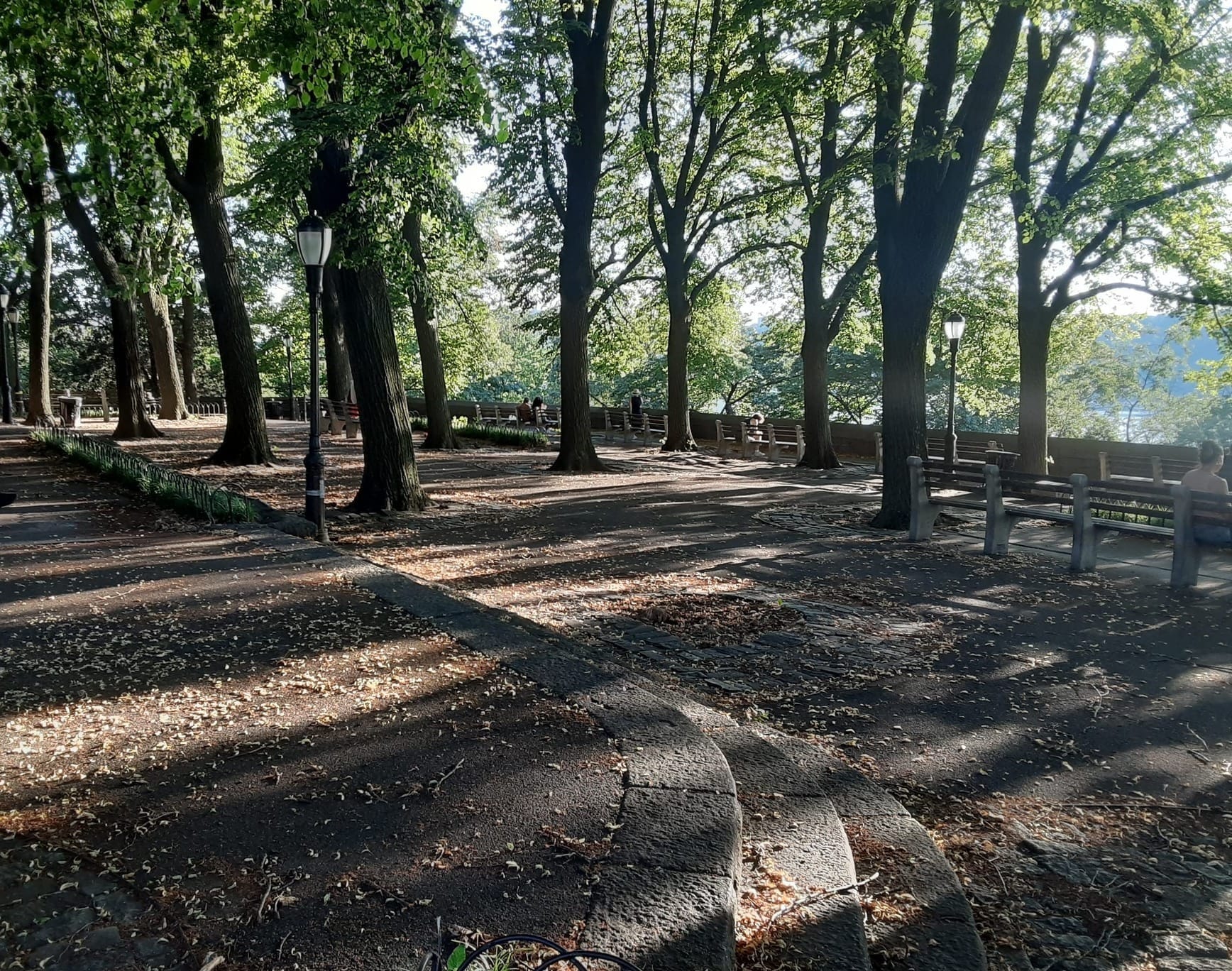
In the early 1900s, the industrialist Cornelius Billings built a country estate there, with a mansion called Tryon Hall. In 1917, John D. Rockefeller, Jr., purchased the property and other land, and he soon took steps to donate it to the city for use as a park. (The mansion burned down.)
In June 1930, The New York Times reported on a formal offer Rockefeller had made to give the land — worth around $140 million in today’s money — to the city.
Along with the offer, Rockefeller suggested a name. “It seems appropriate that the park should be named Fort Tryon Park, perpetuating the Fort Tryon of the Revolutionary days, which was located within its borders,” Rockefeller wrote in a letter to Mayor James Walker.
The story gets murkier. Shultz pointed me toward an article in the Times, published a few months later, which reports that the Upper Manhattan historian Reginald Pelham Bolton had announced that Rockefeller actually objected to the Tryon name “for historical and patriotic reasons.” At this point, it’s essentially a game of telephone: The Times said that Bolton said that Rockefeller said that he wished for the park to be called “Forrest Hill Park.” (I don’t know if that spelling was intentional, or if some long-ago Times reporter just misspelled “forest.”)
Was that accurate? Shultz speculates that Bolton, who disapproved of the Tryon name, tried to force Rockefeller’s hand by misrepresenting his views in public. If so, it didn’t work. Shultz recently traveled to a Rockefeller archive in Sleepy Hollow, where he found what seems to be a copy of the 1931 agreement in which Rockefeller gave the land to the city. It specifies that the site “shall be named Fort Tryon Park.”
The park opened to the public in 1935.
Margaret Corbin Park
Epstein, the local documentary TV producer, told me he began thinking about the park’s name a few years ago. "I’ve always been interested in New York history,” he said. The question struck him one day: “Why is it named for this guy?”
He and Shultz are not the first to wonder why our neighborhood park carries the name of a loathed British official. In the 1970s, a retired furniture salesman, Robert Hoffman, led a campaign to rename the park for Margaret Corbin, a patriot who accompanied her husband to the battle in 1776. When he was killed on Forest Hill, Corbin stepped in to fire a cannon, helping to hold off the attackers. She was wounded during the battle but survived.
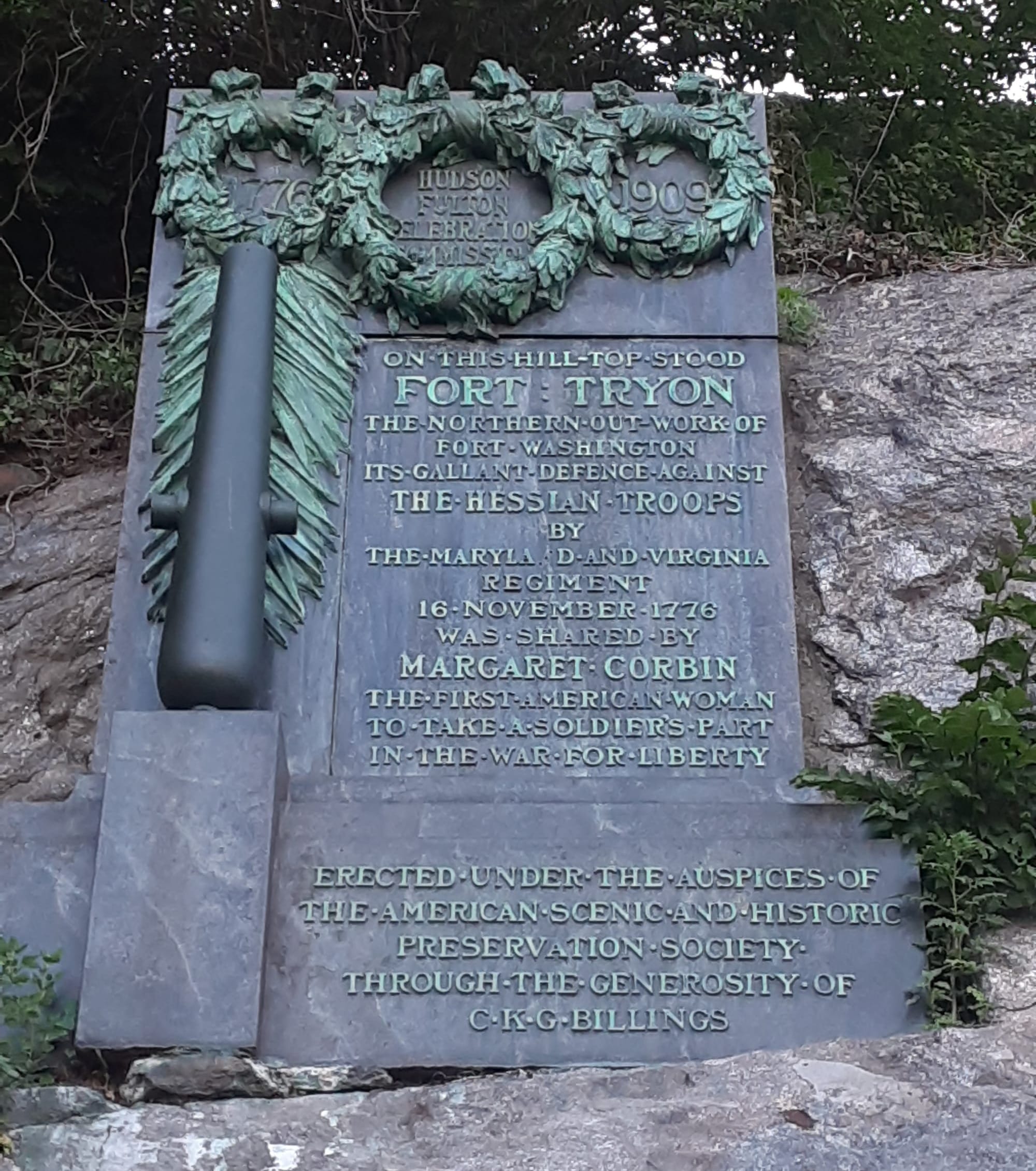
Corbin became the first woman to receive a military pension in the United States, and there is a monument honoring her at West Point.
Hoffman failed to get us a Margaret Corbin Park. The Met Cloisters blocked the proposal, according to an article in the Times. But the City Council did compromise and name the road in the park Margaret Corbin Drive, and the area at one of its entrances Margaret Corbin Plaza. Since then, proposals to rename the park have periodically resurfaced, without success.
Earlier this year, Shultz gave a talk at Dutch Baby about the area’s history, and he brought up the renaming idea. “There was a visible ripple of assent” in the room, he recalled.
A representative of NYC Parks sent over some background information explaining that Fort Tryon park isn’t really named for the colonial governor: “The name references the fort and not William Tryon, the person.” Readers can decide whether this feels like a meaningful distinction.
A Legal Obstacle?
NYC park names have changed before. In 2021, for example, the city renamed a park in the Bronx in light of its namesake’s racist history. There have been similar conversations about Bennett Park.
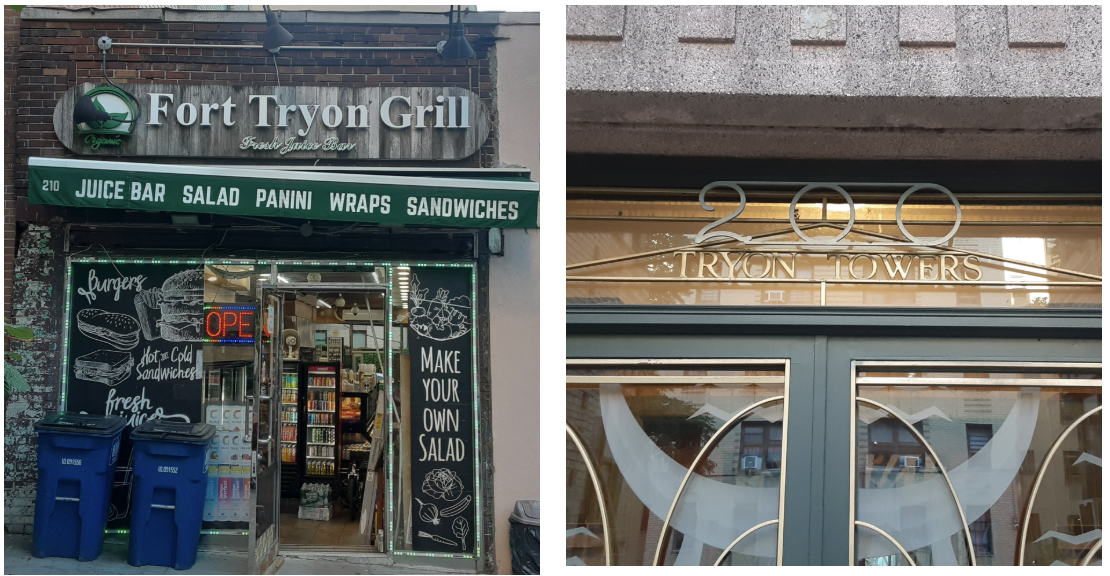
Some people might have good-faith reasons to hesitate to change a park’s name. The city has plenty of sites named for figures with checkered pasts; changing maps and signage is expensive and time-consuming. The Tryon name is also plastered all over this community: There’s the Fort Tryon Park Conservancy, the Fort Tryon Jewish Center, Tryon Public House (a bar), Fort Tryon Grill, Tryon Towers (an apartment building on Pinehurst), the Fort Tryon Center for Rehabilitation and Nursing, Fort Tryon Gardens (an apartment complex on Bennett), and more.
Still, Epstein defended the idea. “I don’t think the expense and effort outweighs the value of elevating a female hero,” he told me.
One big potential obstacle: It’s not clear that renaming the park would be legally feasible, because the original agreement between Rockefeller and the city stipulates the park’s name.
Shultz and Epstein told me they’d settle for more educational material in the park to help visitors learn about the name and the site’s history, including Corbin’s heroism. (The Conservancy has also recently taken new steps to honor her.) They note that more than 2,000 members of the Continental Army were captured in the battle, many of whom went on to endure terrible conditions in British prison ships docked downtown. Corbin herself suffered lifelong wounds from her service.
"There's a story here," said Shultz. "It's not anywhere else. It's here. Renaming the park is one way of getting at that story.”