The Incumbent
An interview with Rep. Adriano Espaillat.
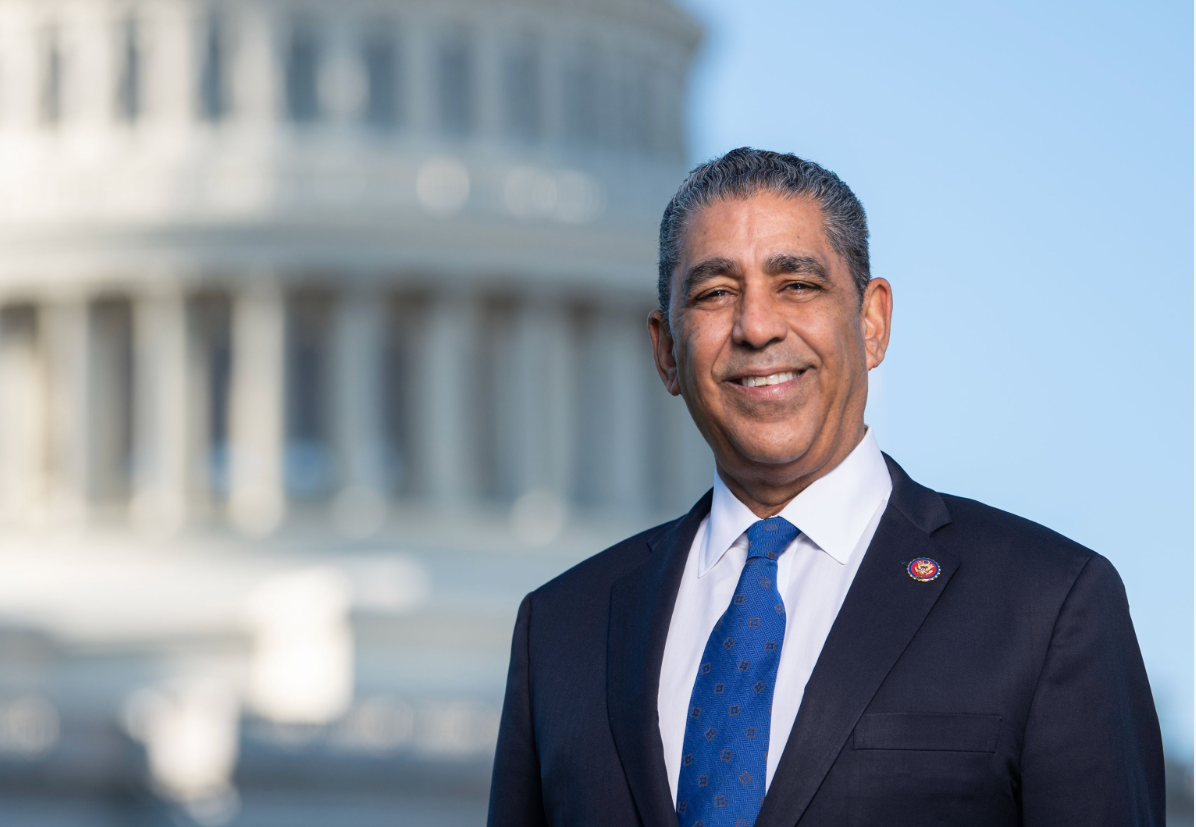
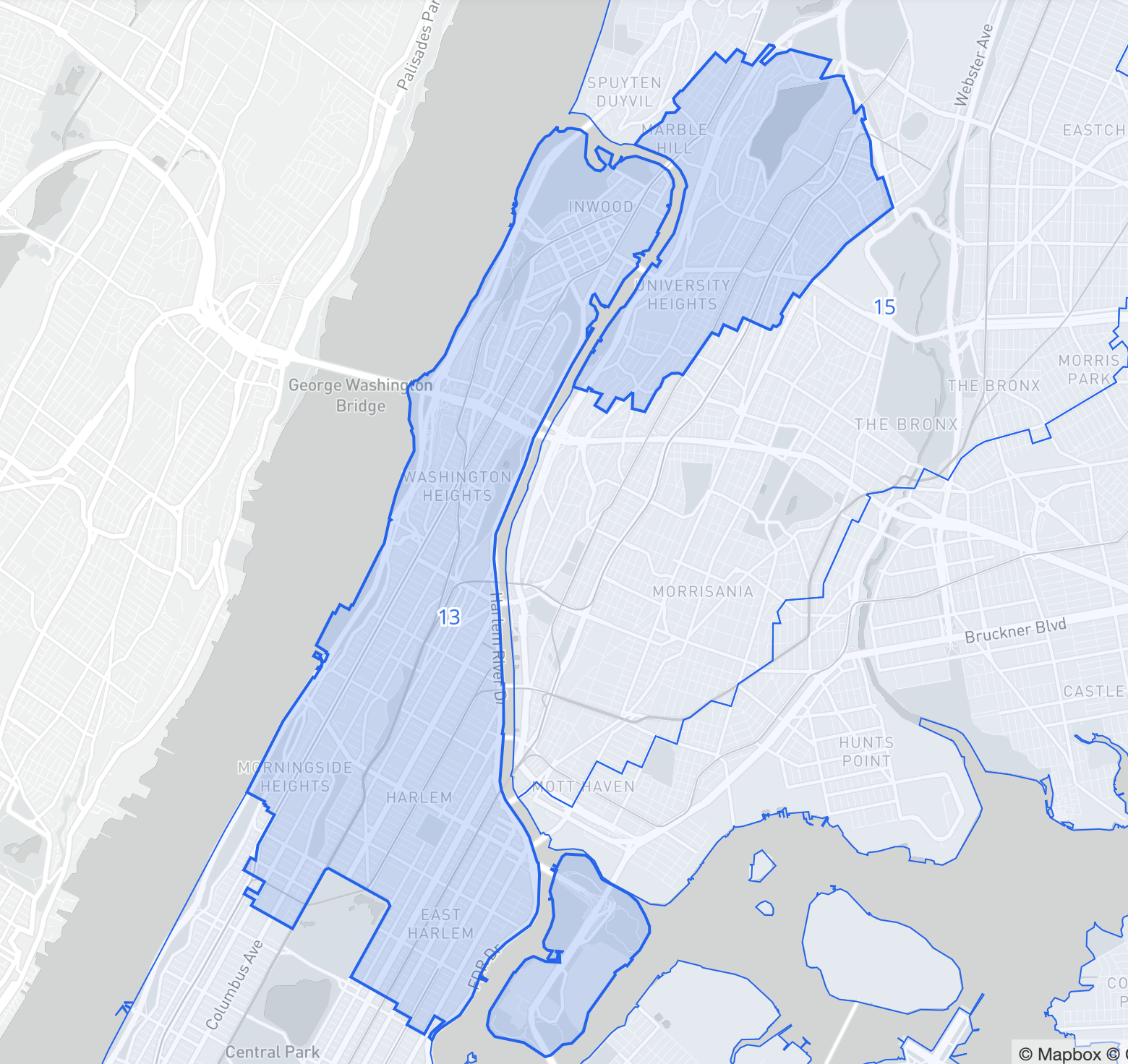
Adriano Espaillat has held elected office for decades, and he’s in his fifth term representing upper Manhattan and parts of the Bronx in Congress. He sits on the influential House Appropriations Committee and chairs the Congressional Hispanic Caucus.
He’s also facing a stiff primary challenge from Darializa Avila Chevalier, a 32-year-old graduate student and organizer who has lived in the district since she was an undergrad at Columbia, and who has the backing of Mayor Zohran Mamdani and the local Democratic Socialists of America chapter.
Avila Chevalier has accused Espaillat of being out-of-touch and beholden to corporate interests and AIPAC, a pro-Israel lobbying group.
In response, Espaillat has invoked his deep roots in upper Manhattan and drawn on his own immigrant story to portray himself as a fighter for working-class New Yorkers.
I spoke with Espaillat by phone on Thursday morning. The interview has been lightly edited for length and clarity.
One note: As a reporter, I believe my job is to ask fair-minded-but-skeptical questions of political candidates — and to fact-check their claims when warranted. You can read my interview with Avila Chevalier here.
The Lighthouse Washington Heights: You've held your seat for almost a decade. You're in your seventies. Democratic Party leadership is historically unpopular right now, even among Democrats, and your opponent has the endorsement of Zohran Mamdani, one of the country's ascendant Democratic stars. Why should voters opt for you over a fresh start?
Adriano Espaillat: Because I'm a new voice in Congress. I am the first formerly undocumented member of Congress, and the first Dominican American to be elected to Congress. As a result of my bold vision for my district, I brought back some results, including funding for the Second Avenue Subway — that's a $7.7 billion project — and the Kingsbridge Armory, which was sitting there idle, a broken promise for the neighborhood for decades. Now it could be the economic engine of the Northwest Bronx and a first-class cultural center for Northern Manhattan.
This is important to the constituents that I represent. They want a bold new voice that's effective, brings back results, and I think I'm providing that.
Funding for Israel has become a big deal in this primary. In April 2024, after the Israeli military had already killed thousands of civilians in Gaza, you voted to authorize a $26 billion military aid package to Israel. [The package included funding for the U.S. military and for humanitarian relief for Palestinians, in addition to money for weapons and defensive systems for Israel.] Why did you vote for the bill, and would you do it again?
Well, the fact of the matter is that I’ve voted against the military budget consistently every single time it comes up, because I feel that the military budget is bloated, and I think that more funding should go to programs like the Medicaid program.
There's over 400,000 constituents that I service that are Medicaid recipients. Or the SNAP program, which I think is so important for single moms, for seniors that have food insecurities.
There's over 100,000 seniors [in the district] that are under the Medicare program. And housing. So this is important, that we align our priorities in the right way — away from military spending and more towards the benefits that our constituencies need to have.
I've been a strong fighter. That's why I got the endorsement of the Congressional Progressive Caucus. I got the endorsement of Planned Parenthood … of the League of Conservation Voters, of many progressive groups across the country.
So, in that context, why vote for the $26 billion package?
Look, I believe very strongly in peace in the region. I think that we need to have a robust diplomatic effort to bring about peace and a two-state solution. I don't support the expansion of the settlements. I think that there should be humanitarian aid to Gaza.
What we all want is peace, and obviously [Israeli Prime Minister Benjamin] Netanyahu is an obstacle to that goal.
I think the question is not “Do you want peace in the region?” but “How does authorizing billions in military aid to Netanyahu's government get everyone closer to peace?”
I will not give one dime, for example, to the illegal, ill-fated war in Iran. I will not support the expansion of violence into Lebanon.
Would you vote for more military aid to Israel while Netanyahu is still in office?
I don’t want Netanyahu to continue to perpetrate violence or to continue to perpetrate war in the region. What we need is a peaceful solution to the conflict — a two-state solution that I support. No expansion of the settlements. Helping bring about robust humanitarian aid, which I support. And I also support the sovereignty of the state of Israel.
Rent here is high. And a lot of Democrats think the solution is to build a lot of new housing. Do you agree that we need to build a ton of new housing here in Washington Heights?
I have a proposal that will review the possibility of using the Inwood rail yards for a potential massive, deeply affordable housing complex. I think that we have the potential there. There are other parts of the city that are being looked at, including Sunnyside, Queens, but the Inwood rail yards are a great possibility for all of us.
You have to build a platform there, but it is a beautiful part of the district. It's a waterfront part of the district that has easy access to it, both public transportation and otherwise. I will fight for a professional review of that project, of that idea, and subsequently the funding that's needed to build it.
There's been very little new housing construction here in the Heights in the decade that you've been in office. Are there things that you would do differently going forward?
Well, there's very little sites [in the Heights], unlike other parts of the district, where you have abandoned lots, abandoned buildings.
The rail yards are a big footprint — similar to, for example, the Kingsbridge Armory, where you're going to have 400 units of deeply affordable housing.
The Inwood rail yard is a potential site for a significant large project that will perhaps bring over 1,000 units of deeply affordable housing.
I've seen you post about the Stop Gentrification in Low-Income Neighborhoods Act, but I'm yet to see a text of the bill. Is that something that's coming?
I can make that text available to you. [Note: On his Congressional website, Espaillat announced plans to introduce the bill as early as 2018; the campaign tells me the bill will be introduced soon.] And of course, as you know, as a resident of the neighborhood, there is gentrification going on in the neighborhood. There is an incremental, if not fast-track, rise of rent.
I was a [friend of the court] against the rezoning process [in Inwood] … because I thought that it would bring gentrification on steroids. I continue to oppose the 70/30, 80/20 model that was promoted in previous administrations. [This model incentivizes construction that’s, say, 70 percent market-rate units and 30 percent affordable housing].
I think that you could build 100 percent affordable housing at three levels — you could still keep that teacher and that police officer, you could also include that home attendant and that cab driver, and finally your third tier could include single moms and seniors that are living on fixed income. That’s the kind of mixed population for affordable housing that makes the neighborhood strong, and I'm willing to promote that. And of course that will stop gentrification.
From what I understand of the bill, I could imagine real-estate developers saying this is going to just make it harder for us to build, and that's ultimately going to raise rents for everybody. How do you respond to that concern?
No, I believe that you could develop affordable housing. If you take a look, for example, at Broadway Housing and the complex that they built on 155th Street, where you have the children's museum – that's deeply affordable. They have a similar project on 135th Street and Riverside Drive for folks that have mental health issues.
You have an art gallery at the rooftop, beautiful building, all fully affordable, deeply affordable, and they were able to put the finances together. I think that everybody ought to take a look at that model to see how we can replicate it.
Your opponent has made corporate PAC funding a big issue in this election. Sugar industry PACs are among the donors to your campaign. Why is that the case?
Well, if you look at the recent New York Times article, you will see that she got an infusion of corporate dollars — over a million dollars just recently. And she's also been funded by groups that are affiliated directly and indirectly to Palantir — [The Times reports that Avila Chevalier has received $1 million from an anti-AIPAC group funded partly by “prominent Muslim business owners.” Regarding Palantir, the campaign pointed me to a New York Post article noting that Avila Chevalier’s campaign has received $150 in donations from a single Palantir employee. Avila Chevalier says she does not accept corporate contributions.]
I'm not asking about her donations. I'm asking about your donations. Could you help me understand why those sugar-industry contributions have been something that you've consistently accepted?
Look, I'm an independent legislator. I respond only to my constituents. I don't respond to anybody that may or may not have donated to my campaign. That's been my record throughout my entire public-service career. I brought resources back home, I fought drugs, I fought for the construction of new schools.
I've organized against landlords that have been abusive to tenants. My district office goes to buildings and organizes them when they're being denied basic services, when they're being denied heat and hot water. I have over 700 sensitive immigration cases in my office, many of which are deportation matters, life-and-death matters. We answer the call every single time.
I think a lot of people see funding from AIPAC, or they see funding from the sugar industry and others, and, fairly or not, they have a perception that you're beholden in some way to interests that are outside of the district. If that's the perception that people have, why continue to take those contributions?
Well, I am not beholden to any interest but the constituents that I serve. That is my primary interest, and I hear them every day. I'm accessible. I fight for projects that are important to them. The Second Avenue Subway will create 16,000 jobs. It will bring the rest of the world to uptown. In the future you will no longer have to go all the way downtown to Times Square to cross over to the West Side or the East Side. You'll be able to do it right on 125th Street. That's going to revolutionize upper Manhattan. You'll be able to get fast bus service to LaGuardia and future water transportation on both the Hudson and the Harlem River. That's a major initiative. That initiative will be an economic engine for the neighborhood, because I'm fighting for local jobs.
I hear you on your record. Again, a lot of people are looking at donations — from AIPAC, from executives at the private equity firm KKR, from the sugar industry — and they have this perception, rightly or not. So I’m asking if you want to speak about why you choose to take contributions from those groups.
I get support across the board from individuals, from everybody, and I’m beholden only to the people that I represent.
I'm an advocate for immigrants. I'm an immigrant myself. I'm the first formerly undocumented member of Congress. I'm the first Dominican American to get elected in a city that has over a million Dominican Americans — there's only one member of Congress, and that's me. I continue to fight for the people that I represent, and I do it independently.