Local History at 250
Commemoration and the Battle of Fort Washington
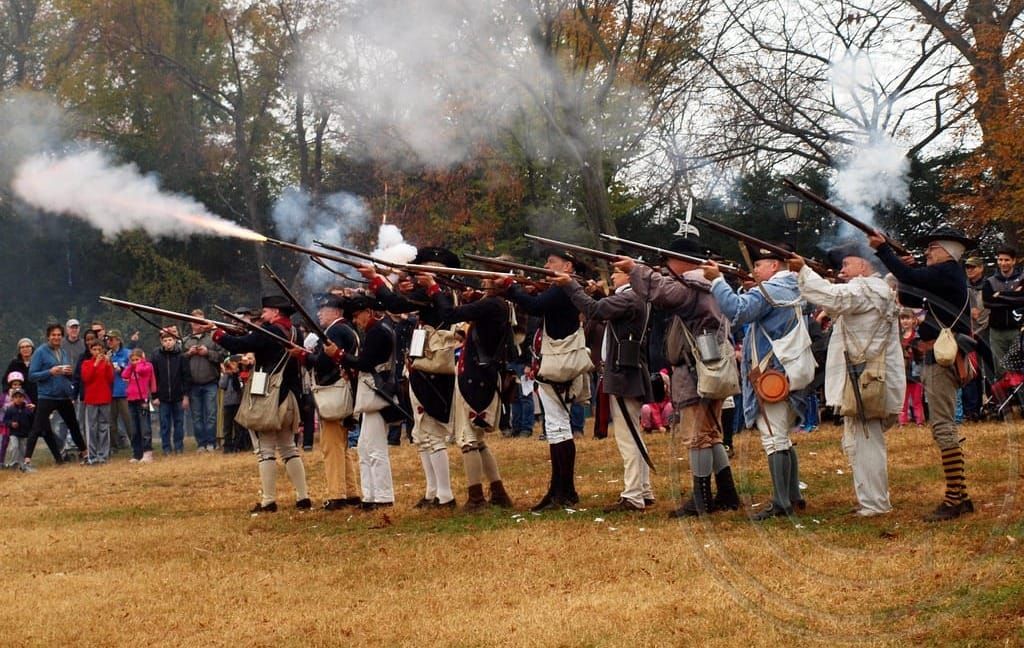
Monday is the 250th anniversary of the Battle of Fort Washington, during which a group of Hessian and British soldiers invaded the neighborhood.
Some places with this kind of American Revolution history plaster their streets with historical signage and memorials. That’s not really the case here in Washington Heights. One consequence is that the area’s vivid history doesn’t always get much attention — or at least isn’t always that visible.
The Background
In 1775 and 1776, patriots pushed British officials and sympathizers out of New York City. By the spring of 1776, the patriots were fortifying the island for battle, historians Edwin G. Burrows and Mike Wallace write in Gotham: A History of New York City to 1898. The patriots built fortifications on a ridge overlooking the Hudson River and named it Fort Washington.
That summer, the British landed thousands of redcoats on Staten Island. Then they invaded Brooklyn. After that defeat, George Washington and his forces retreated from most of Manhattan, leaving behind some troops at Fort Washington. On November 16, 1776, Hessian and British soldiers captured the fort. Washington “watched in horror from Fort Lee as the last American forces on Manhattan were marched into captivity,” Burrows and Wallace write.
“Cradle of American Liberty”
In early October, I met up with Kim Dramer by the cannon in Bennett Park, which sits on part of the old fort. Dramer has a PhD in Chinese art and archaeology, as well as an enthusiastic interest in Upper Manhattan’s revolutionary history.
“This is the cradle of American liberty,” Dramer told me. We walked down to the intersection of Fort Washington Avenue and 181st Street, where workers in 1902, excavating a sewer, found what appeared to be graves from the aftermath of the battle.
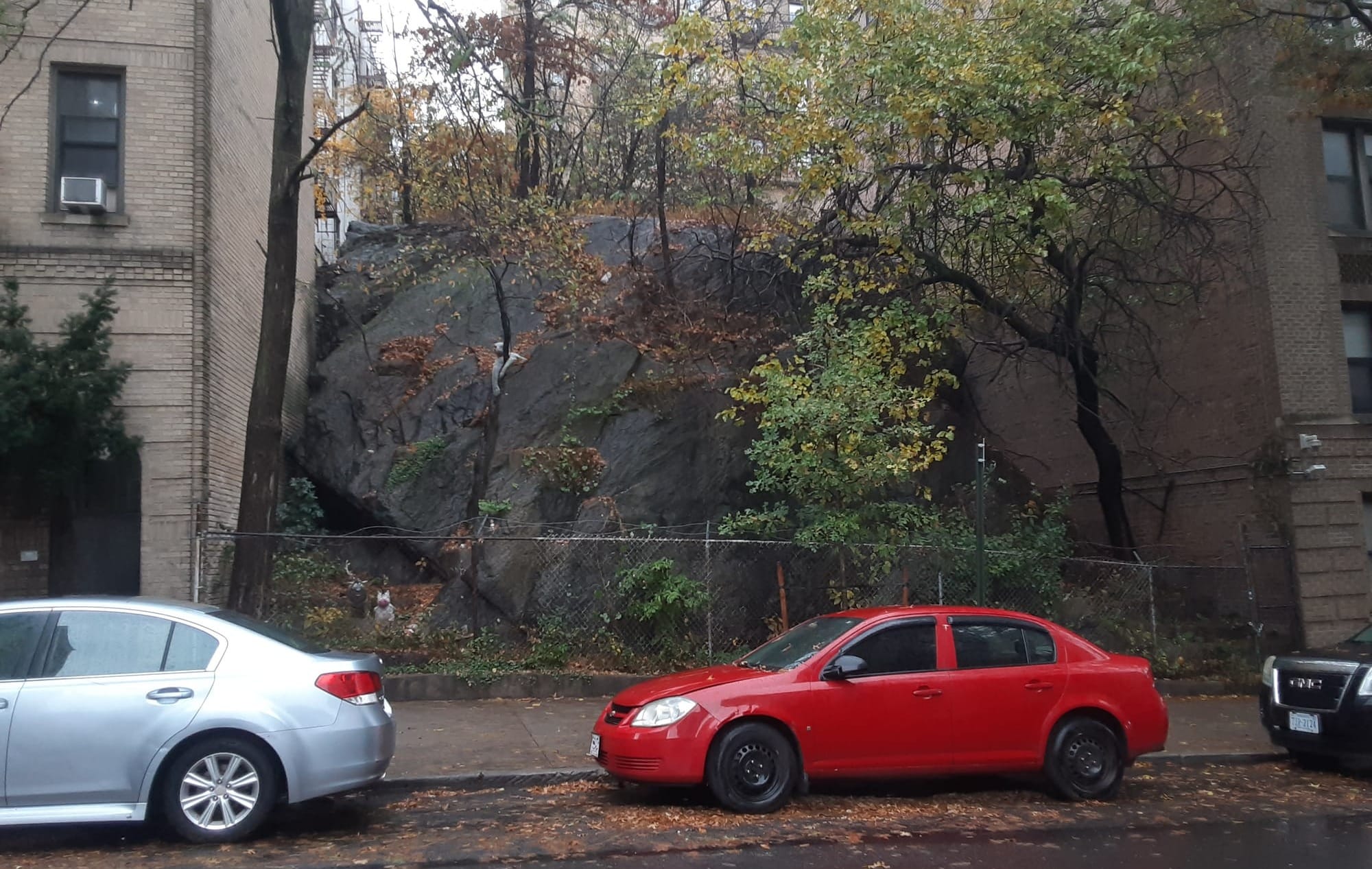
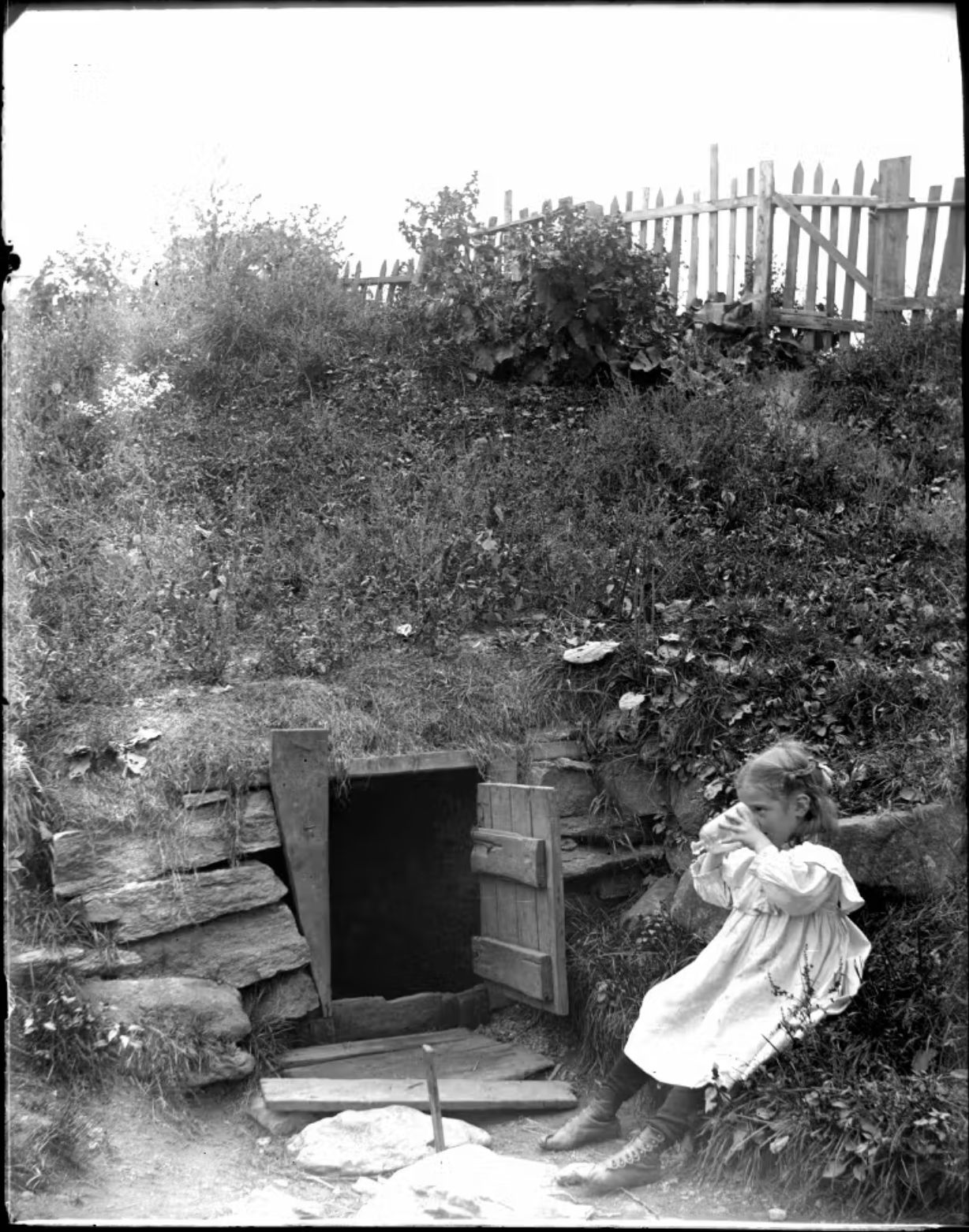
We continued down 181st Street and around a corner, stopping at the large rock near the south end of Bennett Avenue. Today, it’s behind a chain-link fence, and someone has perched a stuffed tiger on a ledge, where it quietly accumulates mold. Dramer points to evidence suggesting that this is the spot once known as Death Gap Rock, which one historical account describes as a “large rock by the road side covered with cedars,” with a small spring at its base. American soldiers quartered on what’s now Bennett got water there, according to the 1924 book Washington Heights, Manhattan: Its Eventful Past.
Nearby is the empty, trash-filled lot at Broadway and 181st Street that’s slated to host a Zeta Charter Schools campus. In the 1700s, this was the site of the Blue Bell Tavern, a spot frequented by American revolutionaries. Just down Broadway, there used to be another spring, flowing near the site of what’s now a Staples.
For the past few years, Dramer has advocated for more historical signage in the neighborhood. “Kids are looking at derelict sites with garbage and rats,” she told me. “What they should be seeing is signage celebrating our heritage and history.”
Which History?
Getting signage installed in this city isn’t easy. Once you start putting up signs or memorials, you also start facing questions: Which history do you tell?
Historian Evan Pritchard, who wrote Native New Yorkers: The Legacy of the Algonquin People of New York, put together a map showing different Algonquin groups in Upper Manhattan before Henry Hudson’s arrival.
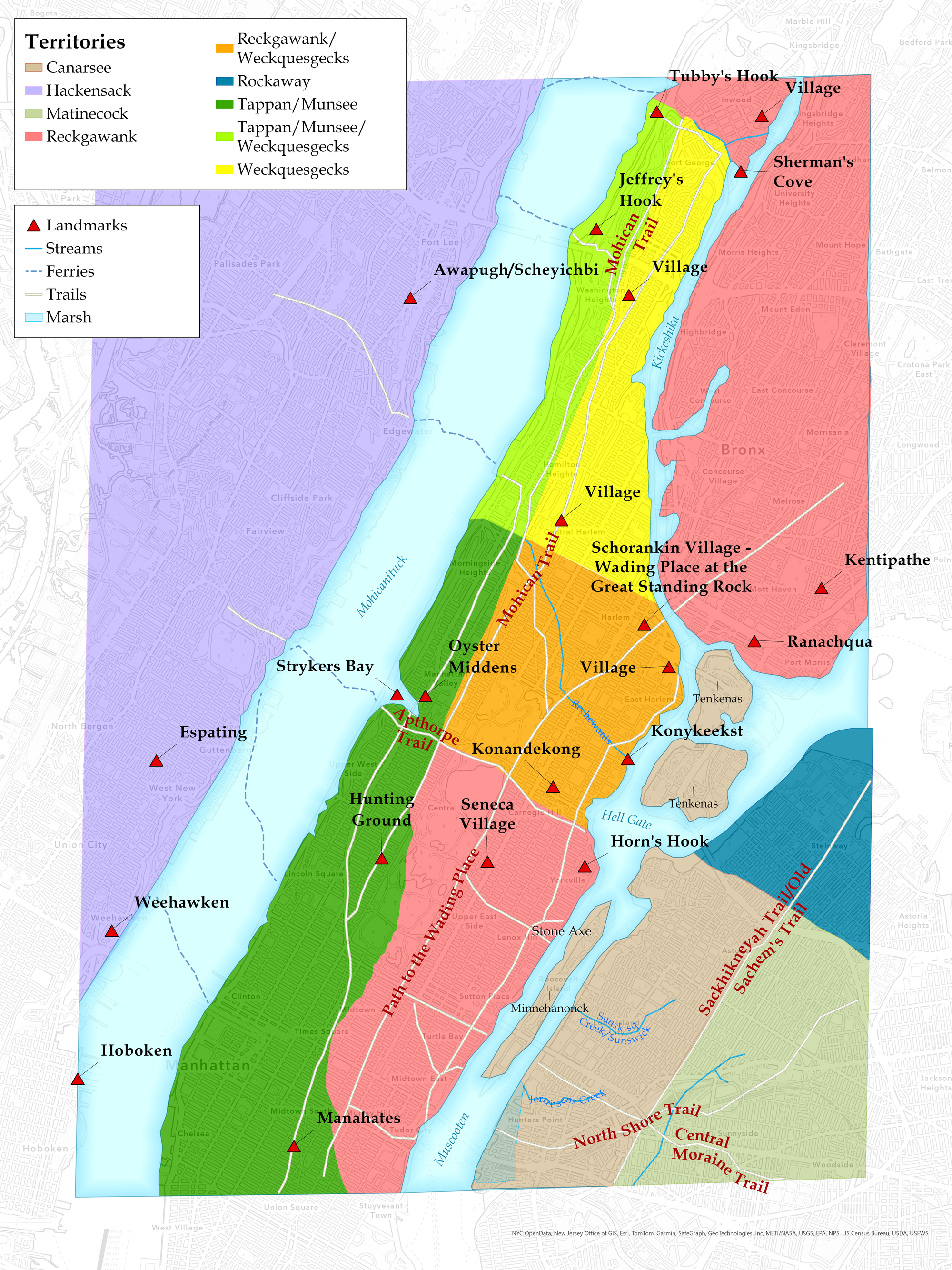
It’s a history that’s often invisible in the neighborhood. When I spoke with Pritchard this week, he talked about the diversity of the communities that once occupied this narrow stretch of land.
Pritchard also brought up Juan Rodriguez, who was born in what’s now the Dominican Republic, traveled on an early Dutch expedition to Manhattan in 1613, and then elected to stay on the island — the city’s “first actual international citizen,” as Pritchard put it. A long stretch of Broadway in the neighborhood is co-named Juan Rodriguez Way in his honor.
During the official celebrations of America’s 250th anniversary this year, stories of colonial violence and dispossession have not been a major theme. Joe Baker, executive director of the nonprofit Lenape Center, told amNY that “the big challenge is to continue our presence in a place that has effectively erased our presence.”
“As long as we’re dragging this myth, the story, this fabricated narrative of the beginnings of this country, I don’t think we can move forward in a good way,” he said.
Up in Inwood, the Dyckman Farmhouse Museum has taken up efforts to research and honor the lives of people enslaved in this part of Manhattan. I asked the executive director, Melissa Kiewiet, what sites they would like more people in the neighborhood to know about. “I wish people knew more about the enslaved burial site,” Kiewiet responded. The site, at 212th Street and 10th Avenue, now has a marker, and the Farmhouse Museum and other institutions are working on getting a memorial there.
Booking George and Martha
A lot of historical work in the neighborhood happens through the local parks. Earlier this week, I met up with the staff of the Fort Tryon Park Conservancy at their new offices on 192nd Street. Executive Director Jana La Sorte — who is also the city’s Administrator of Northern Manhattan Parks — pointed to efforts in Inwood Hill Park to honor Native history, including a partnership with the Lenape Center to plant beach plums. There’s also the annual Drums Along the Hudson event.
The Conservancy is responsible for an annual reenactment of the Battle of Fort Washington. The person coordinating the effort is Walter Sorel, who grew up on Cabrini and now runs programming for the Conservancy. The day after last year’s reenactment, he told me, he reached out to “around 12 different vendors” to get them lined up for this November. “I knew it was 250th, everyone’s going to be busy,” he said. Sorel booked plenty of redcoats and patriots, along with George and Martha Washington.
From 1:00 to 4:00 p.m. on Sunday, on the Café Lawn in Fort Tryon Park, there will be a reenactment of the battle, along with live music, a blacksmithing demonstration, and what Sorel described as “an 18th-century toy demo.” On Monday, the actual anniversary of the battle, the Conservancy is hosting a virtual talk with the writer Jane Gordon Julien about patriot hero Margaret Corbin. On Wednesday, there's a virtual event with historian Sara Cedar Miller about William Tryon, the tyrannical British governor whose name is still all over the neighborhood.
I asked Sorel why the Conservancy marks this historical event. It’s important for residents of the Heights to “know what happened on the land that they’re on,” he said. Many hear about the battle for the first time through events like these, he added: “There were people forgetting that there was a war here.”
Have a story tip? Email mhschulson@gmail.com, or message me on Signal (Schulson.17) or WhatsApp (646-279-6952).