Construction Pending at P.S. 187
The city plans to build a $61 million addition to the school.
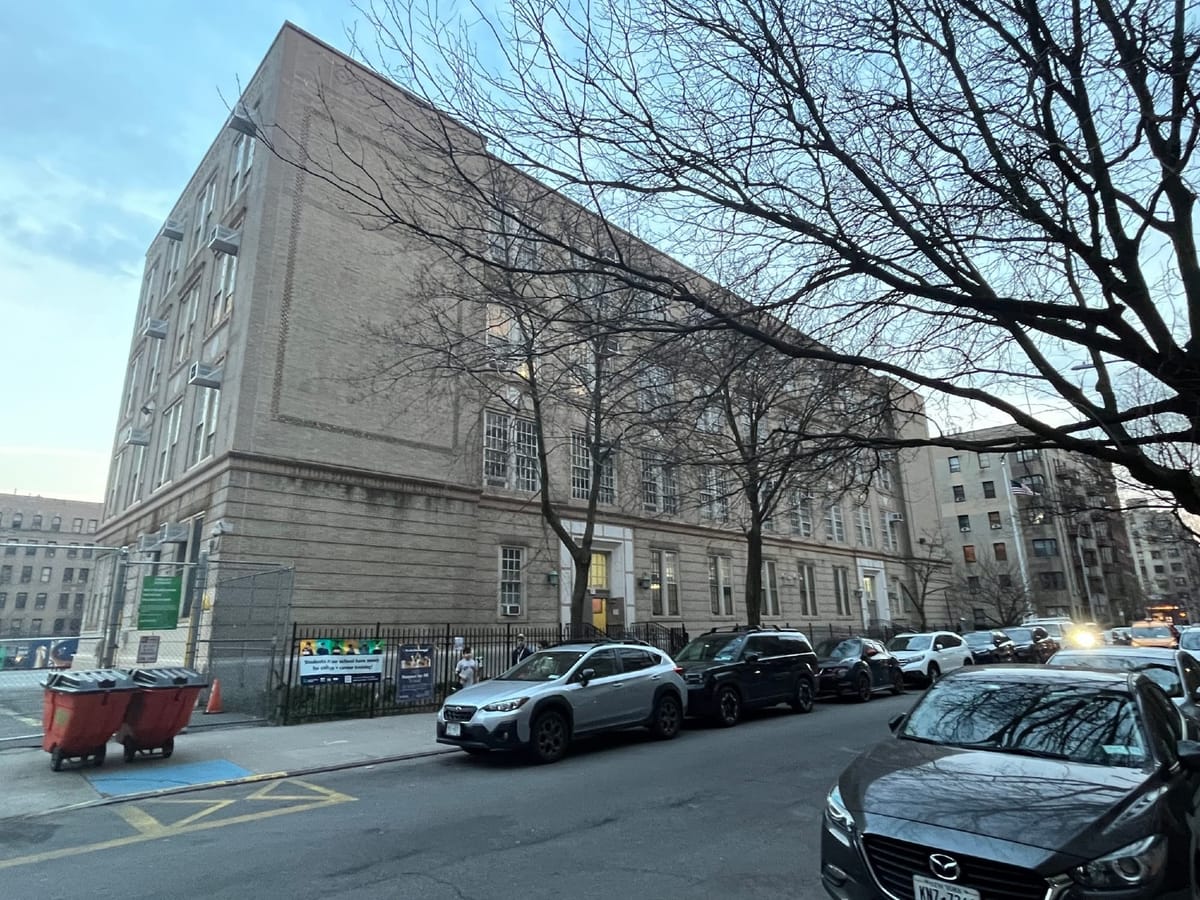
P.S. / I.S. 187 Hudson Cliffs, the big elementary and middle school on Cabrini, is about to get bigger.
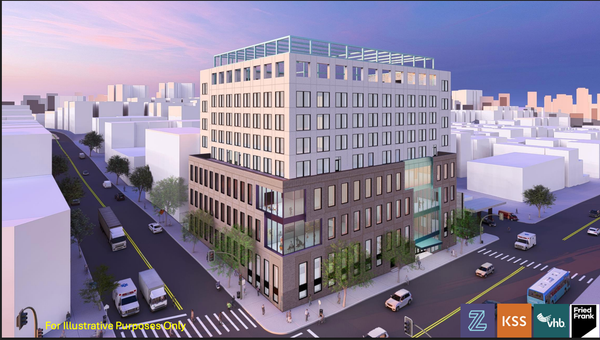
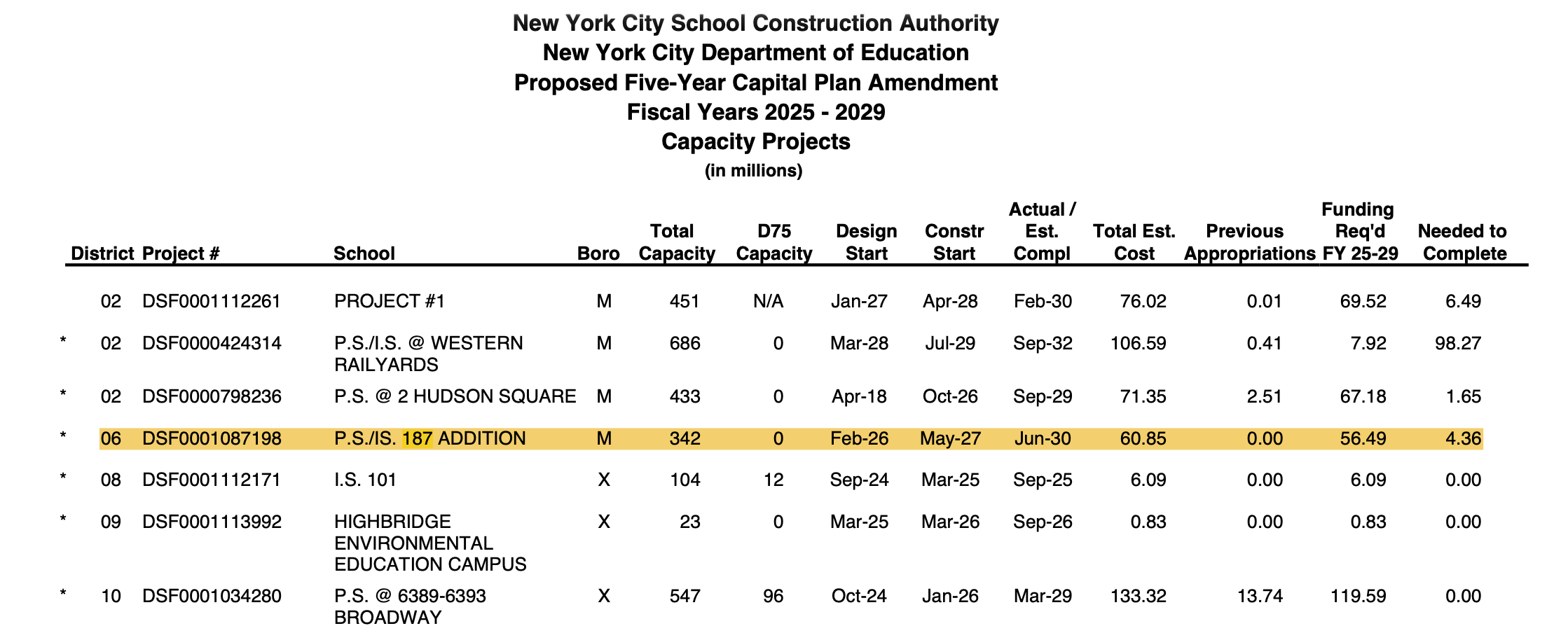
If all goes according to plan, in May 2027, construction will begin on a $60.85 million, 342-seat addition to the school.
The project is currently in the design phase, but Kevin Ortiz, a School Construction Authority spokesperson, was able to confirm some basic details. The new structure will be connected to the old building, not a freestanding annex. And it will be located in some portion of the schoolyard.
The school is getting the addition because of a New York state class-size mandate that’s reshaping public schooling across the city and posing big challenges for some schools here in District 6.
Too Many Students, Too Little Space
In September 2022, state lawmakers capped class sizes in New York City public schools, reasoning that students do better when classes are smaller. The city already had caps in place through its union contract, but the law brought them down by a lot. Here's a handy chart:
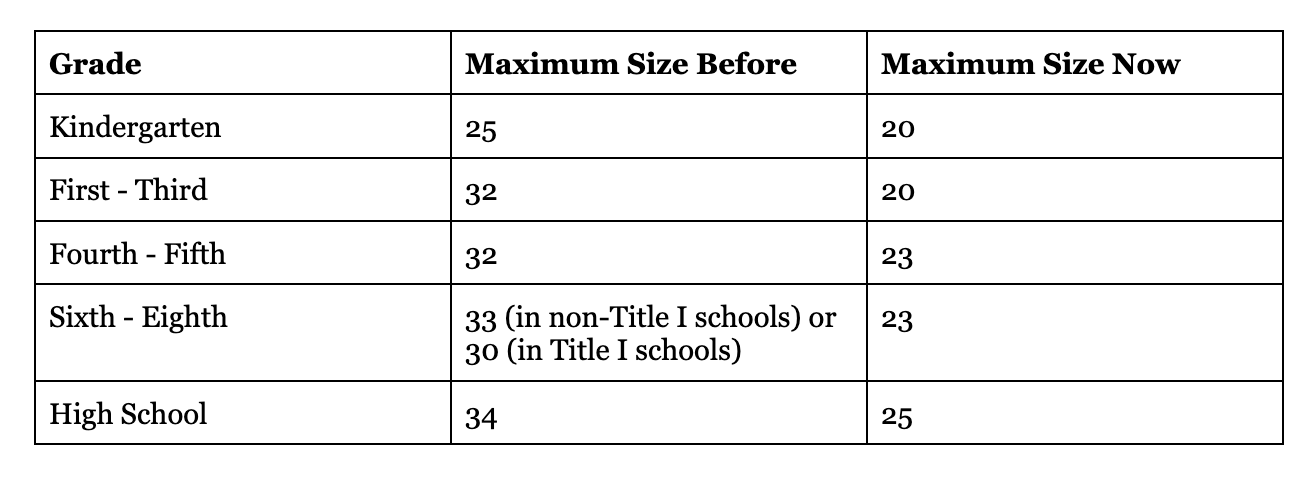
Lawmakers gave the city until 2028 to meet those targets.
Making the math work is tricky. A school that once distributed 95 children across three classrooms now has to distribute them across four or even five. That means more classrooms and more teachers. The city has been on a teacher-hiring spree, and the SCA expects to spend $18 billion to retrofit or build structures to accommodate new classroom space.
Olympia Kazi, a P.S. 187 parent who chaired a parent working group on class size, said she was initially excited about the new law. “I was like, ‘Oh, great, they’re going to have a better experience,’” she recalled. But she feels like the city’s Department of Education dragged its feet in implementing the necessary changes.
At P.S. 187, the challenges were apparent. The school is popular and large, with more than 700 students, and the building was already crowded. Carving out space has had downsides. A few parents told me that school leadership was able to add a first-grade classroom — but only by sacrificing the art room.
None of this really changes the basic math. The school has too many students and too little space. “The question is, either you lower, drastically, enrollment,” Kazi said, “or you find ways to have more classrooms.”
The size of the expansion might suggest that P.S. 187 will actually add to its overall student body. But it's not clear whether that's the case. (I sent a number of interview requests to District 6 Superintendent Renzo Martinez and P.S. 187 Principal Emel Topbas-Mejia. I’m hoping they’ll be willing to speak with me for a future story.)
Other neighborhood schools are facing these kinds of questions. A recent report from the city says that, as of late 2024, there were 13 schools in District 6 needing “additional space to comply with the class size legislation with their current enrollment.”
Ortiz, the SCA spokesperson, told me the addition at P.S. 187 will be ready for the 2030-2031 school year. People familiar with the SCA, which has a reputation for delays, may wonder if this will pan out; Ortiz told me that the agency always hits its target on capacity-expanding projects like this.
Clumping
There’s another piece of context here: District 6 as a whole is under capacity. And overall enrollment is shrinking here, as it is across New York City.
I spent some time this week poking around massive spreadsheets of enrollment data that the city released in February. That data shows 948 kindergarteners in the district spread across 58 single-grade, non-special-education-only classrooms. (Some mixed-grade and special-ed-focused classrooms are tallied separately). Hypothetically, if these students were spread out evenly, that would mean every classroom would have 16 or 17 students, well below the 20-kid cap.
For fourth graders, the average class size would be something like 19.3, under the cap of 23 kids.
But children are clumped. The data indicates that some schools have space in all or almost all their classrooms, while others, including Dos Puentes, Muscota, and P.S. 187, have lots of classes well over the limit.
Mike Handell, a P.S. 187 parent who served on the class-size working group alongside Kazi, told me he sees many upsides to the new addition. But, he said, “there’s this push to spend so much money to expand the school footprint, instead of looking at possibly reallocating students to under-enrolled schools in the district. And that is something that I was always a little bewildered by.”
I ran a version of that question by Luis Camilo, the president of Community Education Council 6. “I’ll give you a very direct parent answer,” he said. Many parents want to enroll their children in P.S. 187, he pointed out; the school is popular among professional-class parents.
For now, District 6 is in a split situation. There may not be enough public school students in the neighborhood to fill all the schools, and some schools could close in the coming years. Meanwhile, as the rules change, the most in-demand schools don't know how to find seats for all their kids.
(Disclosure: I have children enrolled in local public schools and childcare institutions.)